6/30/11

Fashion Review - Spring Men’s Wear Collections in Paris - NYTimes.com

Fashion Review - Spring Men’s Wear Collections in Paris - NYTimes.com

shion & Style

Fashion Review

In Paris, Sensuality Saves the Day

Valerio Mezzanotti for The New York Times; Middle: Michel Euler/Associated Press

From left: a sleeveless leather T-shirts at Raf Simons; bird of paradise prints on shirts and skirts at Givenchy; a checked coat over a long pink shirt at Comme des Garçons.

PARIS — MAYBE it’s too many hours on Twitter that causes people to reduce fashion shows to a check-off list of essentials, but whatever it is, writers at the spring men’s collections here were ticking the appropriate boxes: globalism, gender games, the new sobriety.

Kristy Sparow/Getty Images

TROPICAL A mint suit and matching sandals by Riccardo Tisci for Givenchy's spring 2012 collection.

Valerio Mezzanotti for The New York Times

A Roland Mouret blazer and full trousers.

A youthful Vuitton jacket and shorts.

Valerio Mezzanotti for The New York Times

A sharp Saint Laurent blazer and trim trousers.

Valerio Mezzanotti for The New York Times

Nonchalant Hermès short shorts and turtleneck.

Valerio Mezzanotti for The New York Times

Lanvin military-look jacket over tie-dyed leggings.

This approach doesn’t seek to explore fuzzier sensibilities, or even brewing passions, so much as it surrounds them with a garnish, something that any good host knows to do when the plate looks bare. A few collections did seem ruggedly global in their cultural reach. In his debut as the new men’s designer at Louis Vuitton, Kim Jones mixed classic travel gear with Masai checks and khaki inspired in part by his own African boyhood.

But it’s a given that King Louis is a global entity. More relevant is that Mr. Jones’s relaxed suits and blazers, with their Dartmouth-to-Wall-Street assurance, give a new younger look to the brand — an attitude compatible with Marc Jacobs’s image for the Vuitton women’s collections. The change is meaningful for another reason: though Vuitton is known for bags, clothing and shoes now amount to a significant business.

In most cases, though, globalism was a familiar posture, as with Ann Demeulemeester’s romantic-looking coats, chiffon tunics and broken-down boots, seemingly the last remnants of a formal dinner party in a European enclave in North Africa.

Stefano Pilati of Yves Saint Laurent also alluded to that part of the world, translating the iconic YSL Sahara tunic into laced khaki jackets and shorts. I was more impressed by the suits and coats that opened his show; in a warm shade of navy, with tan shirts or knits, the tailoring looked sharp and contemporary. This was Mr. Pilati’s best men’s show in a while.

But in a way he missed the boat. Saint Laurent was the ultimate sensualist, and if there was one thing the top collections — Givenchy and Comme des Garçons, to my mind — had over the rest, it was their gorgeous blast of sensuality.

Though Rei Kawakubo, the genius of Comme des Garçons, and Riccardo Tisci of Givenchy had skirts in their shows, neither was really playing a gender game. (Both have stuck skirts or dresses in their men’s shows plenty of times.) The key element in Ms. Kawakubo’s collection was the amount of pink, the color of pleasure and sexual arousal. I had the feeling she was using her many tailored jackets and coats (in jacquards and printed checks) less as a masculine foil for pink shirtdresses than as a way to heighten the sensual. You’d have to be a monk not to recognize what the slits in the front of jackets signified, with lining bubbling inside the raw openings.

I thought it was also interesting that Ms. Kawakubo didn’t take the clothes over the edge; for the most part, they were very wearable.

At Givenchy, the feeling of sensuality came from the absurdly wacky bird of paradise prints that appeared on crisp T-shirts, skirts and trousers, and that for evening were glazed with sequins. Against the white and mint backgrounds of suits, which also came in solid hues, the tropical pinks and greens were just irresistible.

I haven’t been a fan of Mr. Tisci’s men’s collections mainly because, in their mixture of religious symbolism and post-punk rage, they project a fake aggression. (I have a hard time buying that pose from a luxury label.) But this time the clothes celebrated life.

With the passage in New York of the marriage equality bill, sensuality seems a particularly valid form. Roland Mouret’s pleated twill trousers and safari jackets in dusk shades of blue, tan and marigold also captured a desire for pleasure, if more subtly.

Unlike Ms. Kawakubo’s generation of entrepreneurs, who were free to be wildly inventive because they figured they had nothing to lose, the current generation of stars typically work for big luxury groups. And, as Loïc Prigent, a French journalist and documentary filmmaker, said, “They’re all about playing by the rules.” Androgyny and adolescent anger feel tapped out, and with more luxury houses now going after babies and children, the next generation is not likely to know any different. Sensuality isn’t a radical choice, but it might just make you feel good.

Raf Simons has been one of fashion’s most effective translators of youth, contemporary art and fashion history. This season he stripped everything down because, he said, “It feels not modern in my own brand to have too much design.” The tiny gold chain that outlined the soles of black lace-ups was as elaborate as things got. Still, the hard-edged attitude of leather T-shirts in turquoise and tangerine, the skinny black pants and loose plaid nylon coats looked polished. As accessible as this collection is, it’s clearly not without new ideas, like those diagonal plaids in unexpected Easter pastels.

At Hermès, Véronique Nichanian was also in a cooler mood, with less color and fewer prints than usual. What registered was a casual detachment from luxury’s rules; she, too, did not have an excess of stuff. Yet you couldn’t get more chic and sexy than a pair of slim shorts with a turtleneck.

I was a little bored with Dries Van Noten’s show: too many dark, high-tech-looking rain fabrics that seemed uncharacteristic of him. As for Lanvin, it fell confidently between the sensual and the sober, with commando looks that gradually gave way to soft, eclectic pieces like striped pajama pants and tie-dyed leggings.

Thom Browne seems determined to be the last fashion freak standing. He took over musty Maxim’s and played Piaf as the guys came out in Weimar-meets-Wall-Street drag. His gaudily fringed clothes suggest a passion, but for some reason I rarely leave his shows knowing more than when I went in.

6/25/11

Garry McCarthy, Chicago Top Cop, Calls Gun Laws 'Government-Sponsored Racism'; Right Responds

Garry McCarthy, Chicago Top Cop, Calls Gun Laws 'Government-Sponsored Racism'; Right Responds

Garry McCarthy, Chicago Top Cop, Calls Gun Laws 'Government-Sponsored Racism'; Right Responds

First Posted: 06/25/11 01:44 PM ET Updated: 06/25/11 02:23 PM ET

Gun rights advocates and other right-wing groups responded harshly on Friday to some strong words on gun control by Chicago's new top cop.

Garry McCarthy, brought in as the superintendent of police by newly elected mayor Rahm Emanuel, made the comments at St. Sabina, a liberal black church in the heart of Chicago's South Side. The Auburn-Gresham neighborhood where the church is located has struggled with gun violence for years, and its pastor, Father Michael Pfleger, is an outspoken supporter of limiting gun rights.

So McCarthy was playing to his audience when he made remarks like these (at around 5:40 in the video):

"So here’s what I want to tell you. See, let’s see if we can make a connection here. Slavery. Segregation. Black codes. Jim Crow. What did they all have in common? Anybody getting’ scared? Government sponsored racism. I told you I wasn't afraid [of race]. I told you I wasn't afraid.

"Now I want you to connect one more dot on that chain of the African American history in this country, and tell me if I’m crazy: Federal gun laws that facilitate the flow of illegal firearms into our urban centers across this country, that are killing our black and brown children."

Immediately after those remarks, he also insisted, as he has often said since coming over to Chicago from Newark, N.J., that the gun control debate has to move "back to the center."

But conservative commentators overlooked that more moderate position in their response to the recently-surfaced video.

“After several minutes of gratuitous self-promotion, McCarthy launched into a racially charged tirade in which he accused the NRA and law-abiding gun owners of participating in a government-sponsored program to kill black people," Richard Pearson, executive director of the Illinois State Rifle Association, wrote on the group's website.

Advertisement
<a href="http://ad.doubleclick.net/click%3Bh%3Dv8/3b32/3/0/%2a/c%3B241660186%3B0-0%3B0%3B29105445%3B4307-300/250%3B40910191/40927978/1%3Bu%3D300x250|bpage%2Cnews|mid_article|gun-control%2Cchicago-gun-control%2Cgarry-mccarthy%2Cchicago%2Cfather-pfleger%2Cgarry-mccarthy-gun-control%2Cgarry-mccarthy-racism%2Cgovernment-sponsored-racism%2Cillinois%2Cst-sabina|co%2Cfb%2Ctw||D|884564|||%3B%7Eokv%3D%3Bchicago%3D1%3Bcrime%3D1%3Bpolitics%3D1%3B%3Bentry_id%3D884564%3Bgun-control%3D1%3Bchicago-gun-control%3D1%3Bgarry-mccarthy%3D1%3Bfather-pfleger%3D1%3Bgarry-mccarthy-gun-control%3D1%3Bgarry-mccarthy-racism%3D1%3Bgovernment-sponsored-racism%3D1%3Billinois%3D1%3Bst-sabina%3D1%3Bglobal%3D1%3Bcap_12%3Dn%3Bqcs%3DD%3B%3Bplat%3Dwin%3Bbr%3Dff%3Bbv%3D5%3Bsubbv%3D0%3Bload_mode%3Dinline%3Bpage_type%3Dbpage%3Bpage_type%3Dnews%3Bpos%3Dmid_article%3Bhot%3Dco%3Bhot%3Dfb%3Bhot%3Dtw%3Bsocial%3Dpepsi_test%3Bu%3D300x250|bpage%2Cnews|mid_article|gun-control%2Cchicago-gun-control%2Cgarry-mccarthy%2Cchicago%2Cfather-pfleger%2Cgarry-mccarthy-gun-control%2Cg%3B%7Eaopt%3D2/1/ff/1%3B%7Esscs%3D%3fhttp://clk.atdmt.com/INV/go/303198844/direct/01/5802445" target="_blank"><img src="http://view.atdmt.com/INV/view/303198844/direct/01/5802445"/></a><noscript><a href="http://ad.doubleclick.net/click%3Bh%3Dv8/3b32/3/0/%2a/c%3B241660186%3B0-0%3B0%3B29105445%3B4307-300/250%3B40910191/40927978/1%3Bu%3D300x250|bpage%2Cnews|mid_article|gun-control%2Cchicago-gun-control%2Cgarry-mccarthy%2Cchicago%2Cfather-pfleger%2Cgarry-mccarthy-gun-control%2Cgarry-mccarthy-racism%2Cgovernment-sponsored-racism%2Cillinois%2Cst-sabina|co%2Cfb%2Ctw||D|884564|||%3B%7Eokv%3D%3Bchicago%3D1%3Bcrime%3D1%3Bpolitics%3D1%3B%3Bentry_id%3D884564%3Bgun-control%3D1%3Bchicago-gun-control%3D1%3Bgarry-mccarthy%3D1%3Bfather-pfleger%3D1%3Bgarry-mccarthy-gun-control%3D1%3Bgarry-mccarthy-racism%3D1%3Bgovernment-sponsored-racism%3D1%3Billinois%3D1%3Bst-sabina%3D1%3Bglobal%3D1%3Bcap_12%3Dn%3Bqcs%3DD%3B%3Bplat%3Dwin%3Bbr%3Dff%3Bbv%3D5%3Bsubbv%3D0%3Bload_mode%3Dinline%3Bpage_type%3Dbpage%3Bpage_type%3Dnews%3Bpos%3Dmid_article%3Bhot%3Dco%3Bhot%3Dfb%3Bhot%3Dtw%3Bsocial%3Dpepsi_test%3Bu%3D300x250|bpage%2Cnews|mid_article|gun-control%2Cchicago-gun-control%2Cgarry-mccarthy%2Cchicago%2Cfather-pfleger%2Cgarry-mccarthy-gun-control%2Cg%3B%7Eaopt%3D2/1/ff/1%3B%7Esscs%3D%3fhttp://clk.atdmt.com/INV/go/303198844/direct/01/5802445" target="_blank"><img border="0" src="http://view.atdmt.com/INV/view/303198844/direct/01/5802445" /></a></noscript>

"Like most of you, we believe an assertion such as McCarthy’s is too nutty to dignify with a response."

Andrew Breitbart's Big Government blog goes for guilt by association: "McCarthy states his comfort speaking to the “right audience” about his views," blogger Rebel Pundit writes. "Could this be because outspoken radical activist Rev. Dr. Michael L. Pfleger is the Pastor of the Faith Community of Saint Sabina? Pfleger is known for his strong anti-gun views, outreach to prostitutes, anti-drug campaigns, and warm relationships with Louis Farrakhan, Al Sharpton and Jeremiah Wright."

And a vitriolic blog post on ChicagoNow pulled no punches. "[W]e have a top cop more interested in appearing at racist churches making race-baiting speeches than doing his job," writes Warner Todd Huston. "Emanuel better watch out because what we obviously have here is just another arrogant jack-booted thug that thinks he should be allowed to make up his own laws instead of enforcing the laws actually on the books.

McCarthy issued a relatively toned-down statement on Friday. "Strong gun laws against illegal firearms are critical in order to maintain public safety and private rights,” McCarthy said, according to the Chicago Sun-Times. “Gang and drug activity intersect with guns, and all three must be the focus of violence-reduction efforts in our communities.”

FOLLOW HUFFPOST CHICAGO
CONTRIBUTE
TO THIS STORY
  • Send a Tip

    Garry McCarthy, Chicago Top Cop, Calls Gun Laws 'Government-Sponsored Racism'; Right Responds

    First Posted: 06/25/11 01:44 PM ET Updated: 06/25/11 02:23 PM ET

    Gun rights advocates and other right-wing groups responded harshly on Friday to some strong words on gun control by Chicago's new top cop.

    Garry McCarthy, brought in as the superintendent of police by newly elected mayor Rahm Emanuel, made the comments at St. Sabina, a liberal black church in the heart of Chicago's South Side. The Auburn-Gresham neighborhood where the church is located has struggled with gun violence for years, and its pastor, Father Michael Pfleger, is an outspoken supporter of limiting gun rights.

    So McCarthy was playing to his audience when he made remarks like these (at around 5:40 in the video):

    "So here’s what I want to tell you. See, let’s see if we can make a connection here. Slavery. Segregation. Black codes. Jim Crow. What did they all have in common? Anybody getting’ scared? Government sponsored racism. I told you I wasn't afraid [of race]. I told you I wasn't afraid.

    "Now I want you to connect one more dot on that chain of the African American history in this country, and tell me if I’m crazy: Federal gun laws that facilitate the flow of illegal firearms into our urban centers across this country, that are killing our black and brown children."

    Immediately after those remarks, he also insisted, as he has often said since coming over to Chicago from Newark, N.J., that the gun control debate has to move "back to the center."

    But conservative commentators overlooked that more moderate position in their response to the recently-surfaced video.

    “After several minutes of gratuitous self-promotion, McCarthy launched into a racially charged tirade in which he accused the NRA and law-abiding gun owners of participating in a government-sponsored program to kill black people," Richard Pearson, executive director of the Illinois State Rifle Association, wrote on the group's website.


Mystery of a Nazi Photographer Solved by Online Readers - NYTimes.com

Mystery of a Nazi Photographer Solved by Online Readers - NYTimes.com
Private collection, via The New York Times

An album of photos from World War II by a mystery photographer includes pictures of Hitler at a train station.

It appeared to be something of a mystery: a little photo album that had fallen into the hands of a New York garment industry executive with debts to pay off. In one snapshot was a bus with German lettering on the side. In another, a kitten on a soldier’s lap.

Blog

ArtsBeat

The latest on the arts, coverage of live events, critical reviews, multimedia extravaganzas and much more. Join the discussion.

Private collection, via The New York Times

Shots from the album of prisoners of war.

Private collection, via The New York Times

Nazi soldiers on the Eastern Front.

Private collection, via The New York Times

The self-portrait that led to crediting the snapshots to Franz Krieger, a military photographer and driver.

Private collection, via The New York Times

Krieger, both professionally and privately, took a range of photos, including motorcycle demonstrations.

Private collection, via The New York Times

Also included in the album: rare shots of Jewish prisoners wearing Star of David patches.

Tony Cenicola/The New York Times

The unsigned album of World War II photographs that has been identified as made by Franz Krieger.

Then came black-and-white images of prisoners of war, some in rags, some in jackets with Star of David patches, staring blankly into the camera.

A few pages later were photographs of Hitler in a train station. As he framed the shot, the photographer was almost as close to the Führer as he had been to the Führer’s captives.

The photographs were obviously taken during World War II. But who was the photographer?

That was only one of the secrets the album had kept.

This week the photographer was identified in less than three hours, thanks to the collective expertise of online readers. He was Franz Krieger, who joined — and then quit — a Wehrmacht propaganda unit known as the Propagandakompanie. Seventy years ago this August, when he was in his mid-20s, the unit sent him on a tour of the Eastern Front.

Krieger’s identity emerged on Tuesday morning after the Lens blog of The New York Times and EinesTages, a site run by the German magazine Der Spiegel and loosely translated as “Once Upon a Time,” published posts with some of the photos. Lens and EinesTages asked readers for information about who had created the chilling little album.

Only one of the 214 photographs bore a caption, faintly penciled in: “Bregenz 1.1.1942.” A town in Austria. The first day of the year, 69 years ago.

The posts generated immediate interest. Marc Pitzke, a New York-based correspondent for Der Spiegel, said EinesTages recorded more than seven million page views on Tuesday. That figure was second only to that for its live blogging of the Fukushima nuclear accident in Japan. Traffic was also unusually heavy on the Lens blog.

There was little to go on in the album itself. No name was scribbled inside the front cover.

The first clue came from Harriet Scharnberg of Hamburg, Germany, who spotted the photographs online, identified them as Krieger’s and said they were taken during his trip to Minsk, in what is now Belarus, in 1941. On the way back to Berlin, she said, he took the pictures of Hitler meeting with Adm. Miklos Horthy, the regent of Hungary, in Marienburg (now Malbork, Poland).

Ms. Scharnberg said that in her research for a Ph.D. dissertation on German propaganda photographs depicting Jews, she had come across Peter F. Kramml’s 2008 book, “The Salzburg Press Photographer Franz Krieger (1914-1993): Photojournalism in the Shadow of Nazi Propaganda and War.”

Dr. Kramml all but confirmed that the photographs were Krieger’s when he sent The Times a copy of a Krieger self-portrait taken in a rear-view mirror. It was identical to one in the album.

The album had been in the hands of a 72-year-old garment-district executive who brought it to The Times, hoping coverage would establish its worth. He wants to sell it to pay his bills. He has undergone quadruple-bypass surgery and has other health problems, and he has filed for bankruptcy — an unpleasant element of personal history he does not want widely known. So he had asked not to be named if any articles were written about the album.

He said he got the album and 50,000 baseball trading cards from a man he knows in northern New Jersey who was having trouble making ends meet. He said he had lent the man some money, and the album and the baseball cards amounted to repayment.

The executive said the man told him the album had come from an older German man whose lawn he used to mow regularly.

The Lens blog reached out to a number of experts before publishing a post, but Krieger’s work was apparently not well enough known to be recognized.

“It doesn’t surprise me the photos were identified,” said Marvin J. Taylor, the director of the Fales Library and Special Collections at New York University, to whom The Times had shown some of the photos before the first post. “It was just a matter of time, given the number of people who were looking at this. The Germans have taken good care of the history of their photographers.”

Krieger, according to Dr. Kramml, had photographed the Salzburg Festival in the mid-1930s and had become a photographer for the Nazis in that city, taking “most of the important pictures in Salzburg from 1938 until 1941.”

Krieger later joined the Schutzstaffel, the Nazi special police, but he left the SS in 1941 for the Propagandakompanie, which sent him to the Eastern Front in August 1941.

A couple of months later Krieger left the Propagandakompanie and “became a simple soldier, a driver,” Dr. Kramml said. In November 1941 he started training in Bregenz, the Austrian town mentioned in the album’s one caption.

By August 1942, Krieger was back in Russia, this time as a supply driver. That put him near Stalingrad. In what might be considered a lucky break, he developed jaundice and was evacuated by train before the Battle of Stalingrad. His illness may explain the pictures of what appear to be convalescing soldiers toward the end of the album.

Dr. Kramml said that Krieger, who had been a store owner before he took up photography, went into business — but not the photography business — after the war. Krieger told people that his mother had given away some of his wartime photographs. “Perhaps he wanted to hide them,” Dr. Kramml said.

Some of those pictures — perhaps the mystery album itself — were presumed to have ended up in Bavaria, he said. Krieger died in 1993.

David G. Marwell, the director of the Museum of Jewish Heritage in Lower Manhattan, said that photo albums like the one the garment-district executive brought to The Times turn up from time to time at flea markets. “What made this one interesting,” he said, “was the range, the way this guy traveled, that gave him access to these different places and the close proximity.”

He mentioned a scrapbook from 1944 that had arrived at the United States Holocaust Memorial Museum in Washington in 2007. It was the personal album of an SS officer. Judith Cohen, the director of the photo archives at that museum, said that what stood out in the album were the photographs of the Jewish prisoners.

“There are very few photographs of Jewish P.O.W.’s with stars,” she said. “These photos are very few and far between and have historic significance.”

The Road to Gay Marriage in New York - NYTimes.com

The Road to Gay Marriage in New York - NYTimes.com

N.Y. / Region

The Road to Gay Marriage in New York

Nathaniel Brooks for The New York Times

Governor Andrew M. Cuomo signed the marriage equality bill into law in Albany on Friday night.

In the 35th-floor conference room of a Manhattan high-rise, two of Gov. Andrew M. Cuomo’s most trusted advisers held a secret meeting a few weeks ago with a group of super-rich Republican donors.

Nathaniel Brooks for The New York Times

Senator Carl Kruger explained his vote in favor of same sex marriage on the floor of the New York State Senate on Friday.

Readers' Comments

Over tuna and turkey sandwiches, the advisers explained that New York’s Democratic governor was determined to legalize same-sex marriage and would deliver every possible Senate vote from his own party.

Would the donors win over the deciding Senate Republicans? It sounded improbable: top Republican moneymen helping a Democratic rival with one of his biggest legislative goals.

But the donors in the room — the billionaire Paul Singer, whose son is gay, joined by the hedge fund managers Cliff Asness and Dan Loeb — had the influence and the money to insulate nervous senators from conservative backlash if they supported the marriage measure. And they were inclined to see the issue as one of personal freedom, consistent with their more libertarian views.

Within days, the wealthy Republicans sent back word: They were on board. Each of them cut six-figure checks to the lobbying campaign that eventually totaled more than $1 million.

Steve Cohen, the No. 2 in Mr. Cuomo’s office and a participant in the meeting, began to see a path to victory, telling a colleague, “This might actually happen.”

The story of how same-sex marriage became legal in New York is about shifting public sentiment and individual lawmakers moved by emotional appeals from gay couples who wish to be wed.

But, behind the scenes, it was really about a Republican Party reckoning with a profoundly changing power dynamic, where Wall Street donors and gay-rights advocates demonstrated more might and muscle than a Roman Catholic hierarchy and an ineffective opposition.

And it was about a Democratic governor, himself a Catholic, who used the force of his personality and relentlessly strategic mind to persuade conflicted lawmakers to take a historic leap.

“I can help you,” Mr. Cuomo assured them in dozens of telephone calls and meetings, at times pledging to deploy his record-high popularity across the state to protect them in their districts. “I am more of an asset than the vote will be a liability.”

Over the last several weeks, dozens of lawmakers, strategists and advocates described the closed-door meetings and tactical decisions that led to approval of same-sex marriage in New York, about two years after it was rejected by the Legislature. This account is based on those interviews, most of which were granted on the condition of anonymity to describe conversations that were intended to be confidential.

‘I Have to Do This’

Mr. Cuomo was diplomatic but candid with gay-rights advocates in early March when he summoned them to the Capitol’s Red Room, a ceremonial chamber with stained-glass windows and wood-paneled walls.

The advocates had contributed to the defeat of same-sex marriage in 2009, he told them, with their rampant infighting and disorganization. He had seen it firsthand, as attorney general, when organizers had given him wildly divergent advice about which senators to lobby and when, sometimes in bewildering back-to-back telephone calls.

“You can either focus on the goal, or we can spend a lot of time competing and destroying ourselves,” the governor said.

This time around, the lobbying had to be done the Cuomo way: with meticulous, top-down coordination. “I will be personally involved,” he said.

The gay-rights advocates agreed, or at least acquiesced. Five groups pushing for same-sex marriage merged into a single coalition, hired a prominent consultant with ties to Mr. Cuomo’s office, Jennifer Cunningham, and gave themselves a new name: New Yorkers United for Marriage.

Those who veered from the script faced swift reprimand. When Assemblyman Daniel J. O’Donnell, an openly gay Democrat from Manhattan, introduced a same-sex marriage bill in May without first alerting the governor’s office, he was upbraided by Mr. Cohen. “What do you think you’re doing?” the governor’s aide barked over the phone.

Mr. Cuomo’s hands-on management was a turning point not just for the marriage movement, but also for his long and fraught relationship with the gay community. Advocates groused that he had waited until 2006 to endorse same-sex marriage, years after many leading New York political leaders did so. And many of them still remembered his work on his father’s unsuccessful 1977 bid for mayor of New York, which had featured homophobic posters aimed at Edward I. Koch.

Over time, however, championing same-sex marriage had become personal for Mr. Cuomo. He campaigned on the issue in the race for governor last year, and after his election, he was staggered by the number of gay couples who sought him out at restaurants and on the street, prodding him, sometimes tearfully, to deliver on his word.

The pressure did not let up at home. Mr. Cuomo’s girlfriend, Sandra Lee, has a gay brother, and she frequently reminded the governor how much she wanted the law to change.

Something else weighed on him, too: the long shadow of his father, Mario, who rose to national prominence as the conscience of the Democratic Party, passionately defending the poor and assailing the death penalty. During his first few months in office, the younger Mr. Cuomo had achieved what seemed like modern-day miracles by the standards of Albany — an austere on-time budget and a deal to cap property taxes. But, as Mr. Cuomo explained by phone to his father a few weeks ago, he did not want those accomplishments to define his first year in office.

“They are operational,” he told his father. Passing same-sex marriage, by contrast, “is at the heart of leadership and progressive government.”

“I have to do this.”

A Democratic Surprise

Nobody ever expected Carl Kruger to vote yes.

A Democrat from southeast Brooklyn, known for his gruff style and shifting alliances, Senator Kruger voted against same-sex marriage two years ago, was seen as a pariah in his party and was accused in March of taking $1 million in bribes in return for political favors.

Some gay activists, assuming he was a lost cause, had taken to picketing outside of his house and screaming that he was gay — an approach that seemed only to harden his opposition to their agenda. (Mr. Kruger has said he is not gay.)

But unbeknown to all but a few people, Mr. Kruger desperately wanted to change his vote. The issue, it turned out, was tearing apart his household.

The gay nephew of the woman he lives with, Dorothy Turano, was so furious at Mr. Kruger for opposing same-sex marriage two years ago that he had cut off contact with both of them, devastating Ms. Turano. “I don’t need this,” Mr. Kruger told Senator John L. Sampson of Brooklyn, the Democratic majority leader. “It has gotten personal now.”

Mr. Sampson, a longtime supporter of same-sex marriage, advised Mr. Kruger to focus on the nephew, not the political repercussions. “When everything else is gone,” Mr. Sampson told him, “all you have left is family.”

With Mr. Kruger suddenly a possible yes vote, the same-sex marriage organizers zeroed in on the two remaining Democrats who had previously voted no but appeared open to switching sides: Shirley L. Huntley and Joseph P. Addabbo Jr., both of Queens.

Senator Huntley, a close friend of Mr. Sampson, had privately assured him that she would support the marriage bill, largely out of personal loyalty to him and fellow Democrats.

Persuading Senator Addabbo proved trickier. Same-sex marriage advocates had nicknamed him the Counter, after he told them that his vote would hinge entirely on a tally of his constituents who appealed to him for or against the measure. By mid-May, Mr. Addabbo sent word to Mr. Cuomo that the numbers were not there for gay marriage.

Until then, members of the same-sex marriage coalition had deliberately refrained from inundating Mr. Addabbo’s office with feedback from supporters of the bill, fearing it might alienate and offend him.

But now, the advocates received a message from the governor’s office: Open the floodgates. Brian Ellner, who oversees the marriage push for the Human Rights Campaign, called the head of his field team, who had compiled an exhaustive list of supporters of gay rights in Mr. Addabbo’s district.

“Bury him in paper,” Mr. Ellner said.

Over the next week, the field team collected postcards signed by 2,000 of Mr. Addabbo’s constituents who favor same-sex marriage, twice as many as he had received in the previous few months combined.

When his final tally was completed in early June, he had heard from 6,015 people — 80 percent of whom asked him to vote yes. “In the end, that is my vote,” Mr. Addabbo said.

Republicans Resist

In a private room at the Fort Orange Club, a stately brick manor in Albany where the waitresses still wear French maid uniforms, a pollster laid out the results of his research on same-sex marriage for Senate Republicans in early June.

There was little political rationale for legalizing it, the numbers suggested: statewide support did not extend deeply into the rural, upstate districts that are crucial to the state’s Republican Party. And with unemployment at 9 percent, the issue was far down the list of priorities for voters.

Many of the Republicans wanted to avoid ever taking a vote on the issue — a simple strategy to carry out. As the majority party in the Senate, they could block any bill from reaching the floor.

But the caucus — a group of 32 senators who had seized control of the Senate in the elections last year but held just a single-seat majority — was far from unified. And, crucially for same-sex marriage advocates, the Republicans’ relatively untested leader showed no interest in forcing them to reach a consensus. “My management style,” the Senate majority leader, Dean G. Skelos of Long Island, had told lawmakers, “is that I let my members lead.”

Mr. Cuomo was determined to exploit the leadership vacuum by peeling off a few senators from moderate districts.

A major target was James S. Alesi, a Republican from suburban Rochester, who seemed tormented by his 2009 vote. Cameras in the Senate chamber captured him holding his head in his hands as the word “no” left his mouth.

The coalition approached him from every angle. The Republican donors invited him to a meeting on Park Avenue, telling him they would eagerly support him if he backed same-sex marriage. “That’s not the kind of lily pad I normally hop on,” Mr. Alesi recalled.

The advocates collected 5,000 signed postcards from his constituents and nudged a major employer in his district, Xerox, to endorse the bill.

And Mr. Cuomo called him, over and over, to address his objections and allay his fears. He told Senator Alesi that as the first Republican to endorse same-sex marriage, he “would show real courage to the gay community.”

On June 13, aides to the governor left urgent messages with same-sex marriage advocates, who had just left a meeting in Mr. Cuomo’s office, to return there immediately, offering no explanation. As the group assembled around a conference table, the governor opened the door to his private office and peeked in. “I want to introduce the first Republican to support marriage equality,” he announced.

Mr. Alesi walked into the room, which erupted into applause. In emotional remarks, he apologized to them for what he called his “political vote” against same-sex marriage in 2009.

The next day, Bill Smith, a lobbyist for Gill Action, a gay-rights group, turned to the governor and asked, “How many rabbits are you going to pull out of the hat?” he asked.

Outgunned Opponents

It was befuddling to gay-rights advocates: The Catholic Church, arguably the only institution with the authority and reach to derail same-sex marriage, seemed to shrink from the fight.

As the bill hurtled toward a vote, the head of the church in New York, Archbishop Timothy M. Dolan, left town to lead a meeting of bishops in Seattle.

He did not travel to Albany or deliver a major speech in the final days of the session. And when he did issue a strongly worded critique of the legislation — he called it “immoral” and an “ominous threat” — it was over the phone to an Albany-area radio show.

Inside the Capitol, where a photograph of Mr. Cuomo shaking hands with Archbishop Dolan hangs in the governor’s private office, the low-key approach did not seem accidental. Mr. Cuomo had taken pains to blunt the church’s opposition.

When he learned that church leaders had objected to the language of the marriage legislation, he invited its lawyers to the Capitol to vent their frustration.

Mr. Cuomo even spoke to Archbishop Dolan about the push for same-sex marriage, emphasizing his respect and affection for the religious leader. An adviser described the governor’s message to Archbishop Dolan this way: “I have to do what I have to do. But your support over all is very important to me.”

By the time a Catholic bishop from Brooklyn traveled to Albany last week to tell undecided senators that passing same-sex marriage “is not in keeping with the will of their people,” it was clear the church had been outmaneuvered by the highly organized same-sex marriage coalition, with its sprawling field team and Wall Street donors.

“In many ways,” acknowledged Dennis Poust, of the New York State Catholic Conference, “we were outgunned. That is a lot to overcome.”

With the church largely out of the picture, the governor’s real worry was the simmering tension in the Senate Republican delegation. Its members met, for hours at a time, to debate the political and moral implications of allowing a vote.

But each time new arguments arose. Some questioned whether homosexuality was genetic or chosen. Others suggested that the same-sex marriage legislation be scrapped in favor of a statewide referendum.

Mr. Cuomo invited the Republicans to visit him at the governor’s residence, a 40-room Victorian mansion overlooking the Hudson River, just a few blocks from the Capitol.

There, in a speech the public would never hear, he offered his most direct and impassioned case for allowing gays to wed. Gay couples, he said, wanted recognition from the state that they were no different than the lawmakers in the room. “Their love is worth the same as your love,” Mr. Cuomo said, according to someone who was in the room. “Their partnership is worth the same as your partnership. And they are equal in your eyes to you. That is the driving issue.”

In the late hours of Friday night, 33 members of the State Senate agreed with him.

Danny Hakim contributed reporting.

6/21/11

Skateboarders take ‘pretty awesome’ ride through downtown L.A. - latimes.com

Skateboarders take ‘pretty awesome’ ride through downtown L.A. - latimes.com

L.A. NOW

Southern California -- this just in

« Previous Post | L.A. NOW Home | Next Post »

Skateboarders take ‘pretty awesome’ ride through downtown L.A.

Ln5xqync Hundreds of skateboarders took to the streets of downtown Los Angeles in celebration of "Go Skateboarding Day" on Monday, embarking on a five-mile skate through the city.

The group of skaters -– mostly teenage males -– gathered at Hollenbeck Park, just east of downtown and ended at Lafayette Park.

"This is pretty awesome," said Chris Rodriguez, 15, of Boyle Heights while waiting for the ride to start.

PHOTOS: Wild in the Streets skateboard ride in L.A.

The roads were not closed for the event, said a spokeswoman for Emerica, a skating shoe manufacturer sponsoring the event.

LAPD Cmdr. Andy Smith said about 300 people were participating in the "Wild in the Streets" event. Organizers put the count at closer to 1,000.

He said a few people had been cited for traffic citations as they moved on surface streets, but the group was "well behaved."

The group was spending time at Lafayette Park and it was doubtful with the high temperatures Tuesday afternoon that the skateboarders would continue on to Venice, which was supposed to be their final destination, Smith said.

"Anytime someone calls an event 'Wild in the Streets,' it's something we want to pay attention to," Smith said. "Right now they are laying down in the heat or goofing around in the skate park. There's been no trouble. They've been very well-behaved so far."

The annual event has taken place in New York, Vancouver and Madrid. This is the first time it has come to Los Angeles.

The event is intended to benefit Boards for Bros, a nonprofit group that collects and refurbishes skateboards to donate to children who cannot afford them.

It donated 130 refurbished skateboards to the Salesian Boys and Girls Clubs of Los Angeles this week.

ALSO:

Woman's body found in Torrance hotel room

Authorities search for remains of 7-year-old who disappeared in 1961

Charges possible for alleged sex crime depicted in Big Bear yearbook

-- Ricardo Lopez and Andrew Blankstein

Photo: Skateboarders take over a portion of 6th Street on International "Go Skateboarding Day" in downtown Los Angeles. Credit: Allen J. Schaben / Los Angeles Times

6/20/11

Reggie Brown, Obama Impersonator, Defends Performance At Republican Leadership Conference (VIDEO)

Reggie Brown, Obama Impersonator, Defends Performance At Republican Leadership Conference (VIDEO)

Reggie Brown, Obama Impersonator, Defends Performance At Republican Leadership Conference (VIDEO)

First Posted: 06/20/11 01:26 PM ET Updated: 06/20/11 01:30 PM ET

Reggie Brown, the Obama impersonator whose set was cut short at the Republican Leadership Conference this past weekend, is pushing back against the idea that he was yanked off stage for making racial remarks about President Obama -- but he does acknowledge that his barbs at GOP presidential candidates may have struck a nerve with the conservative audience.

“I was told it was a time constraint,” Brown told CNN's Kyra Phillips on Monday. He says conference organizers told him that he had 15-20 minutes for his set and that he had run a few minutes over when his microphone was cut off mid-way through a joke about Michele Bachmann.

Was it a coincidence that he was escorted off the stage just as he was poking fun at a Republican presidential candidate, Phillips asked? “I was at the Republican Leadership Conference, and I was just entering my set where I was starting to have some fun with the Republican candidates,” Brown replied. “I do believe that I was over my time by a few minutes, and I also believe that the material was starting to get to a point to where maybe they started to feel uncomfortable with where it was going.”

RLC President and CEO Charlie Davis told CNN that the performance had gone too far and was getting inappropriate. "Had I been in the room I would have pulled him sooner. We have zero tolerance for racially insensitive jokes. As soon as I realized what was going on I rushed backstage and had him pulled," Davis said.

Brown said that organizers should have been aware of the material he planned to use, since much of it had been done before at other events. “Whenever we work with a client we always forward them our website, so a lot of the material that I did do at the Leadership Conference had been done time and time again in front of all different types of audiences -- Democrat, Republican, Tea Party, all ends of the political spectrum. We may have added two or three jokes, but all was pretty standard from my set.”

Brown disputed that the racial jokes played in part in his set being cut short.

“I didn't hear any boos on any of the racial jokes,” Brown said. “The president, like myself, shares a mixed background. My mother's white, my father's black, and I feel very safe delivering content like that. And the president himself has poked fun at his heritage.”

Advertisement

“I wouldn't touch anything that I don't think the president would feel comfortable with or hasn't done himself," Brown said. "He's someone that I respect, and I want to make him happy, and I want him to appreciate what I'm doing.”

WATCH:


6/19/11

Jon Stewart LIVE On Fox News, Tells Host 'You're Insane' (VIDEO)

Jon Stewart LIVE On Fox News, Tells Host 'You're Insane' (VIDEO)

Jon Stewart LIVE On Fox News, Tells Host 'You're Insane' (VIDEO)


First Posted: 06/19/11 12:02 PM ET Updated: 06/19/11 07:00 PM ET

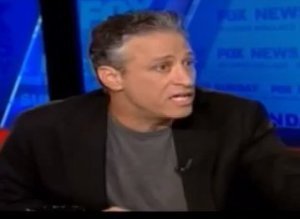
The Daily Show's Jon Stewart entered the proverbial lion's den, appearing live on Fox News Sunday to debate "media bias" with host Chris Wallace.

Early in the interview, Wallace flashed a previous quote of Stewart's calling Fox News a "relentless agenda-driven 24 hour news opinion propaganda delivery system," and asked Stewart, "Where do you come up with this stuff?"

Stewart responded, "Uh, it's actually quite easy."

Later, when Wallace argued that a clip about Sarah Palin from the Daily Show was political commentary, Stewart told Wallace, "You're insane... Here's the difference between you and I. I'm a comedian first. My comedy is informed by an ideological background, there's no question about that. But the thing that you will never understand...is that Hollywood, yeah, they're liberal, but that's not their primary motivating force. I'm not an activist. I am a comedian."

"Do I want my voice heard?" Stewart continued later. "Absolutely, that's why I got into comedy. Am I an activist, in your mind? A partisan ideological activist?" Wallace responded, "Yeah." "Okay, then I disagree with you," Stewart said. "You can't understand, because of the world that you live in, that there is not a designed ideological agenda on my part to affect partisan change because that's the soup you swim in. And I appreciate that, I understand it. It reminds me of in ideological regimes, they can't understand that there is free media other places because they receive marching orders."

However, it was in a later exchange that Stewart got actually angry at Wallace, as he talked about what he called the misinformation that Fox News gave its viewers.

"The embarrassment is that I'm given credibility in this world because of the disappointment that the public has in what the news media does," he said.

"I don't think our viewers are the least bit disappointed with us," Wallace said. "I think our viewers think, finally, they're getting somebody who tells the other side of the story."

"Who are the most consistently misinformed media viewers?" Stewart shot back, his voice rising. "The most consistently misinformed? Fox, Fox viewers, consistently, every poll."

Watch highlights of the interview:


Watch the full, unedited interview:

FOLLOW HUFFPOST MEDIA
CONTRIBUTE

 
Design by Free WordPress Themes | Bloggerized by Lasantha - Premium Blogger Themes | Macys Printable Coupons