
- Although influenced by the gestural panting of his Abstract Expressionist contemporaries, De Niro's aesthetic was primarily shaped through the subjects and styles of France's 19th-century artists and early Modernist painters of Europe.
- De Niro helped to establish painterly representation as a specific, unique style in its own right, rather than a simple extension of existing European and American methods.
- The ongoing friction between reality and abstraction in De Niro's paintings sets them apart from those of his contemporaries. Almost all his works are representational, but they are also very expressive, making bold, imaginative use of color, lines and brushstrokes.
Childhood
Robert De Niro was born in Syracuse, New York in 1922. He began making art at age 5 and showed immediate and immense talent, eventually enrolling in adult classes at the Syracuse Museum. At only 12 years old, he impressed his teachers so much that he received his own studio in the museum school. While his Irish mother encouraged his painting, his Italian father did not. Despite his father's disapproval, De Niro continued developing his exceptional artistic skill.
Early Training
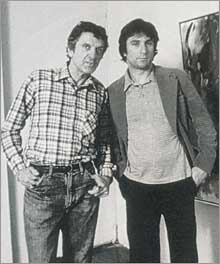 In 1939, De Niro spent a summer studying with legendary painter and teacher Hans Hofmann before spending two years on full scholarship at the avant-garde Black Mountain College in North Carolina, studying with Josef Albers. De Niro, however, disliked Albers' strict theories of color. In 1941, De Niro left Black Mountain for Hofmann's school in New York, feeling a stronger connection to Hofmann's style of creating abstract movement through color. For the next several years, De Niro studied with Hofmann in both New York and Provincetown, later working at Hofmann's school. While there, De Niro met painter Virginia Admiral. The two were married in 1942, and their son Robert De Niro, Jr., the award-winning actor, was born in 1943. Hofmann, who considered De Niro one of his greatest students, became his son's godfather. However, two years later, De Niro and Admiral separated. During this time, while De Niro and Admiral were part of New York's literary and artistic bohemian circles, De Niro worked as a guard in the Museum of Non-Objective Art, which would later become the Guggenheim Museum. The director Hilla Von Rebay became a financial supporter of his work.
 Mature Period
In 1946, at only 24 years old, De Niro had his first one-man show at Peggy Guggenheim's Art of this Century Gallery, a major exhibition space at the time. Clement Greenberg was among the critics who strongly praised his work, writing, "[T]he originality and force of his temperament demonstrate themselves under an iron control of the plastic elements such as is rarely seen in our time outside the painting of the oldest surviving members of the School of Paris." De Niro's paintings during this period were abstract, but maintained figural references. Though he drew from the gestural abstraction of his New York School peers, he felt more strongly influenced by the color palette and motifs of French Fauvism and the Old Masters. Feeling closest to European artists, rather than his Abstract Expressionist peers, De Niro pursued his own, singular direction, becoming somewhat of an outsider within the New York School community. Despite his paintings' spontaneous, fluid quality, De Niro made numerous studies and drawings to carefully establish the composition before creating the final product. In fact, he disparaged his peers' desire for a fully unconscious creation of art. By the 1950's, De Niro had established what would be his definitive artistic style for the remainder of his career: modern painterly representation.
De Niro began exhibiting regularly alongside other Abstract Expressionists such as Willem de Kooning, Jackson Pollock and Franz Kline, and received positive critical support from writers such as Frank O'Hara, who in Art News called De Niro "one of the most original and powerful younger painters showing today." Yet, De Niro did not sell enough of his art to take up painting full time. Despite his imposed remove from many of the Abstract Expressionists, he did depend on occasional financial support from his fellow artists, such as de Kooning. As new artistic movements such as Pop Art and Minimalism became popular, De Niro remained committed to his personal style. Discouraged by his resulting lack of commercial success compared to his contemporaries, he moved to France in 1961, returning to New York in 1965 after falling into depression.
Late Period and Death
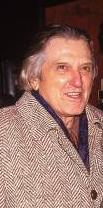 In 1968 De Niro received a prestigious Guggenheim Fellowship, and during the late 1960s and 1970s, he continued creating and exhibiting work. At the same time, he also taught at a variety of schools, including SUNY Buffalo, Cooper Union and the School of Visual Arts. In 1974, he created two lithograph series at Tamarind Institute in New Mexico. In addition to his paintings and sculptures, De Niro was a writer and poet. He published a 1976 volume of poetry called "A Fashionable Watering Place" and contributed to art magazines such as "Art/World." He moved to San Francisco in 1977, but by 1980 was back in New York, where he remained until his death from cancer in 1993. De Niro's last studio in SoHo still exists exactly as he left it, having been preserved by his son.
 Legacy
Although De Niro's primary period of commercial and critical success was brief, he was well known and respected within the art world throughout his career. Through work that simultaneously reflected and sharply contradicted Abstract Expressionist thought, De Niro created a distinctive brand of painterly representation. His intense commitment to this personal style even as more popular movements took shape around him made him significant in expanding the purview of post-war American art. Today, his works can be found in the collections of the Hirshhorn Museum and Sculpture Garden, the Corcoran Gallery of Art, the Metropolitan Museum of Art, the Whitney Museum of American Art and the Brooklyn Museum, among others.
ARTISTIC INFLUENCES
Below are Robert De Niro's major influences, and the people and ideas that he influenced in turn.

Artists
Critics/Friends
Movements


Henri Matisse

Tennessee Williams

Hans Hofmann

Anais Nin

Andre Derain

Robert Duncan

Figurative Expressionism

Chaim Soutine

Jackson Pollock

Abstract Expressionism

Pierre Bonnard

Willem de Kooning

Fauvism



Robert De Niro, Sr.
Years Worked: 1933 - 1993



Larry Rivers

Clement Greenberg
Figurative Expressionism

Jane Freilicher

Thomas B. Hess

Neo-Fauvism

Lester Johnson

Painterly Representation
Artists
Critics/Friends
Movements
Quotes
"The whole idea of 'action painting' is foreign to me, and, I believe, detrimental to painting, which is what Leonardo called it, 'a mental thing.' A physical action is painting, when it dominates, dulls sensitivity to nature and to one's own feelings, precludes subtlety, and institutes a dead mechanical routine."
"I would like to think that the exhilaration will have a great effect and influence in the deepest sense, not causing painters to develop mannerisms based on Bonnard's style, but causing them to try to equal as much as they are able, Bonnard's essence."
ARTWORKS:

Title: Portrait of Mrs. Z
Year: 1959
Materials: Oil on canvas
Description: De Niro's primary subjects were representational landscapes, still lifes and portraits, such as the seated woman in Portrait of Mrs. Z. He expanded on these traditional subjects with carefully chosen combinations of vivid colors bordered by distinctive outlines, reflecting an influence of artists such as Cezanne who also painted expressionistic figurative works. Through these works, De Niro gained recognition for connecting French Fauvist painters' colors and representational themes with Abstract Expressionists' gestural paint application.
Collection: Hirshhorn Museum and Sculpture Garden, Washington, D.C.

Title: Pattern Still Life #1
Year: 1960
Materials: Oil on canvas
Description: In Pattern Still Life #1 , one of De Niro's many still life paintings, he continued using representational subject matter as a forum for expressionistic experiments with color. Often drawn to interesting patterns and designs, he closely replicated the decorative patterns found around the room, but in many other still life works he deployed a more abstracted style. He also integrated his diverse, multicultural interests into his work, commingling exotic or antique sculpture amidst everyday flowers and fruit. By the time he created this painting, De Niro had solidified the painterly representational style in which he worked for the remainder of his career.
Collection: Hirshhorn Museum and Sculpture Garden, Washington, D.C.

Title: Nude with Leg Up
Year: 1970
Materials: Oil on canvas
Description: Although De Niro was making work at the same time as the Abstract Expressionists, he drew less on the sharp angles of Cubism than did his contemporaries. Nude with Leg Up illustrates his propensity for rich, thickly applied colors, dynamic, spontaneous curves and wavy brushstrokes. Linearity played a particularly integral role within De Niro's work; many of his paintings' compositions relied on bold outlines to give structure to the abstracted sections of color.
Collection: Hackett-Freedman Gallery, San Francisco

Title: Gray Barn in Blue Landscape
Year: 1976
Materials: Oil on gessoed panel
Description: De Niro's landscapes, many of which he painted in the 1960s and 1970s, often featured a harmonious relationship between architecture and nature, with one blending into the other. In these paintings, De Niro merged deep abstraction with recognizable images of buildings, roads and plants. He also continued using the bright, Fauvist palette prevalent in his other works. Gray Barn in Blue Landscape also exemplifies the recurring overlapping of colors using thick, undulating brushstrokes.
Collection: Ameringer-Yohe Gallery, New York

Title: A Fashionable Watering Place
Year: 1978
Materials: Color lithograph
Description: In addition to painting, De Niro also wrote a great deal, particularly poetry, which he self-published in a 1976 book called A Fashionable Watering Place. This 10-part lithograph series of the same name combines his handwritten poetry and black and white illustrations. His expressionistic imagery brings to life the visual descriptions in his poems. The poem written on this page begins, "The rose behind your ear/ Close to your temple/ Is fading/ And you with it.
Collection: Fine Arts Museums of San Francisco, San Francisco

Title: Crucifixion with Two Figures
Year: 1982
Materials: Oil on canvas
Description: Crucifixion scenes were another frequent motif for De Niro, reflecting his personal background as a lapsed Catholic who retained his interest in the religion, particularly in the ritual, art and music. Despite the specific subject matter, these paintings were as expressionistic as his other works, and thus, they sidestepped extreme religious iconography. Yet, they still possess strong emotional undertones, reinforced by the dark lines and vibrant shapes De Niro created using a brush heavily loaded with rich paint.
Collection: Estate of the Artist
 ©2009 The Art Story Foundation All Rights Reserved info@theartstory.org


No comments:
Post a Comment