10/30/09

Peruvians in New Jersey", at the Newark Public Library, thru December 31st

Objects in exhibition, "A Journey from Ancient Times: Peruvians in New Jersey", at the Newark Public Library, thru December 31st. The stained-glass skylite over the atrium, as well as some overhead lites, are reflected in the glass top of the case.

Dare I say that Open Doors has become too big an event to fit into a single four-day weekend, even with a couple of outlying events? It may be time to extend it judiciously, starting with a full workweek with bracketing weekends. This year, there were events on both days of the prior weekend, but Monday thru Wednesday saw not a one.

Another display case in NPL Peru exhibit.

We might also want to move OD earlier than late October. I don't know why late October was chosen, but it's always a good idea to review things periodically and ask if the reasons that produced a given schedule still hold. If not, we might want Newark's big arts bash to occur in warmer weather than we can count on in late October (tho the next few days are expected to be warmer than the stretch of miserably subnormal days we suffered over the past week and more).

"Lord of Miracles" poster in NPL show.

Her piece, which called on the Jolie Pitt household to take better care of adopted daughter Zahara's hair

Full Post

Posted Thursday, October 29, 2009 5:53 PM

Bloggers Respond to Allison Samuels' Essay On Zahara Jolie Pitt

Kate Dailey

During of Good Hair week, a series of blog articles devoted to issues of hair, culture, politics, and science, we asked writer Allison Samuels to contribute a guest blog posting. Her piece, which called on the Jolie Pitt household to take better care of adopted daughter Zahara's hair, touched on the politics of inter-racial adoption, the role of beauty standards by which our children (and we) are judged, despite all our lip service towards the contrary, and the power of hair to guilde our sense of self and place. Noting that Zahara's hair often looks damaged and unkempt in photos, she writes:

Any self-respecting black mother knows that she must comb, oil, and brush her daughter’s hair every night. This prevents the hair from matting up, drying out, and breaking off. It also prevents any older relatives from asking them why you’re neglecting your child and letting her run around looking like a wild woman. Having well-managed hair is not just about style, it’s about pride, dignity, and self-respect.

And while Samuels didn't advocate unnatural and painful straightners or relaxers, she worried that Zahara's hair was not being groomed appropriately, and that the maintenance required to keep African hair healthy was being ignored. Samuels is not alone. In several of the blog postings she cites, the comments are full of women commenting on Zahara's unkempt hair -- and some bloggers spoke out in agreement after her column posted, like the editor at MAC Chronicles:

Advertisement


As much as I like Angelina Jolie and it is apparent that her and Brad Pitt supply a loving home and environment for their kids, it it also evident that that Zahara’s hair requires more than Shiloh and the other kids... Parents are responsible for the appearance of their kids, so Angelina will have to step it up and make sure that all of her kids look ready for the day

Then again, there were many more people who felt that any haircare related complaints only made the issue worse. Critics claimed that the arguments in the piece reinforced unfair standards of beauty, unfairly criticized a family who has done much to open their homes to children from all parts of the world, and, at worst, placed unfair scrutiny on a four year old child. Blogging at Jezebel, Latoya expressed her frustration with the moving goalposts that are African-American beauty standards:

We (as young black girls) are always different. If our hair is perfectly straight, flowing and bouncing, there's still the matter of features and skin tone. Even if our hair is perfectly straight, it will feel different because many of us moisturize with grease (or other products) instead of washing the grease down the drain in the morning. We are different and there is nothing wrong with that. Assimilation is not guarantee of acceptance.

To answer those critics, Samuels wrote a second essay, published this week on Newsweek.com. And because we know there are as many opinions on this topic as there are types of shampoo on the shelves, we invited several bloggers to further comment on Samuel's piece and the issue of Zahara Jolie Pitt's hair. Their essays will be published throughout the day. 

Tag(s): Featured, Body Politics, Culture, Good Hair

The authors of the new book Hollowing Out the Middle talk about rural brain drain, and how to address it.

Doughnut-Hole Country


image

By Christina Gillham | Newsweek Web Exclusive 

Oct 30, 2009

The future of rural America looks increasingly bleak: fueled by the rise of agribusiness and the corresponding decline of family farms, the loss of manufacturing jobs, and the flight of young people to urban centers, rural communities have been losing their populations for decades, and now they're close to the breaking point. Since 1980, more than 700 rural counties—most of them in the middle of the nation, running from North Dakota down to Texas—have lost 10 percent or more of their population. In response, a number of rural areas have enacted initiatives to help lure residents back. In 2003, Ellsworth County, Kans., for example, began offering free 15,000-square-foot lots to families who could get preapproved by a bank and begin building their home on the lot within a year. But in an intriguing new book, Hollowing Out the Middle, husband-and-wife authors Patrick J. Carr and Maria J. Kefalas argue that it will take more than just free land initiatives to reverse rural America's brain drain—it will require that the towns themselves adopt a new way of thinking.

How should they do this? First, by changing their attitudes toward their high-school graduates. Small towns traditionally put all their efforts behind the smart students (whom the authors label "Achievers"), pushing them out to four-year universities in cities, where they are much more likely to succeed and, unfortunately for the town, much more likely to stay. Students who are less accomplished or driven are given little support, but they are also the ones who are most likely to remain in their small towns post-graduation. In order to make sure these kids succeed, and thus benefit the community, the authors argue, they need to be better trained in areas such as computer technology, health care, sustainable agriculture, and green energy, areas geared toward the modern global economy. Rural towns should also capitalize on the federal stimulus package by investing in green agriculture and energy, say the authors, and work on attracting immigrant populations, who can help revive dying towns through their sheer numbers.


To research the decline of rural America, Carr and Kefalas spent six months in a 2,000-resident town in northeastern Iowa (given the pseudonym Ellis in the book), where they interviewed hundreds of current and former residents, whom they categorized as Achievers (those who leave), Stayers (those who remain), Seekers (those who leave to travel or join the military), and Returners (those who leave and come back). They spoke to NEWSWEEK about their experience there and about what they believe can be done to stop the emigration from this country's heartland.

Why is it important that we care about rural America's brain drain?
Carr:
A nation is really only strongest when all of its parts can contribute and all of its parts are healthy. Rural America has a hugely symbolic resonance for the rest of America. More fundamentally, this is a place where most of our food comes from; it's also a place that disproportionately has people serving in the armed forces.

But if the brain drain forces these towns to die out, wouldn't those qualities just get shifted elsewhere?
Carr: The argument you're making is sort of akin to the boom-and-bust argument. Frontier towns died and the country was fine because that's just the cycle. That's true to a certain extent, but what's different here is [that] the scale of it is pretty massive. Not every small town is at the same stage of hollowing-out, but the fact is the majority of these towns are tending towards the hollowing-out stage, and unless it's addressed, it's going to get worse. We're talking not just the Midwest, but throughout the Texas panhandle, Appalachia, in Louisiana, in Maine, in West Virginia, and Vermont. The other thing that makes it different is that this has been a slow-burning issue. Boom-and-bust towns grow traumatically and they contract just as traumatically—they flourish and they die. But [in this case] it's gone under the radar because of the slow-burning nature of it.

A lot of people have argued that these small towns' demise is inevitable. Isn't there a case for letting these places die?
Kefalas: Sixty million Americans [one in five] live in rural America. I strongly believe we wouldn't be asking the question, should we let the inner city die? Should we let other communities wither and fall by the wayside? I think we have a moral obligation to these communities, an economic need to sustain them—this area is where our food comes from, and it's going to be ground zero for the renewable-energy revolution, so I don't think it's good for America or for these communities to say, "Well, let's just go through some Darwinian process of natural selection and the strong will survive and the weak will die." With an investment, with a plan, with renewed energy, it will be great for America and the region. We won't be able to save all of the small towns, but saving a number of them will be good for the country as a whole.

What about turning these areas into "Buffalo Commons”-type spaces, as proposed by Frank and Deborah Popper more than two decades ago, which would revert depopulated lands to their natural wildlife habitats? Even big cities like Detroit are proposing demolishing some areas and replacing them with green space.
Kefalas: There's some legitimacy to that argument. That is happening in the northern plains of Kansas, for example, where this was not very viable, arable land, where these areas were not very populated. So they have been evacuating these areas, almost, and reimagining them as these "Buffalo Commons." I think creating these green zones and letting the land go back to a more sustainable and natural state is potentially quite good and useful. Certainly some of those communities will have to face that decision, but I think many more have so much to contribute.

How did the people of Ellis respond to your solutions for curbing the brain drain?
Carr: No bunch of people you write about are going to be thoroughly delighted; there's going to be a fair amount of rancor, and that's healthy. You need to use that as a steppingstone to reexamine what you're doing and say: Could we do something better? Could we make those linkages between secondary and postsecondary education better, so that high school is not just geared for people going on to a four-year college degree? Could we retrain people to be able to be competitive in industries that are a growth industry in Iowa, like biotech and nursing and wind energy? Could we begin to think differently about the stranglehold that big industry has on the heartland?

Kefalas: In Ellis, people very clearly saw what is in their future, and I think this is something that the mayor, chamber of commerce members, and parents are all very clear about. The mayor on several occasions told me, "I'm worried we won't make it." There is a sense of fear and anxiety. But the battleground is ultimately going to be, how do we fix it? Reimagining education undoes a time-honored tradition of "Well, we send our best kids away—that's kind of what we do." What we're saying is, let's take a deep breath and think about this whole process of how you educate your young people.

Your book seems something of a rebuttal to those who have embraced the ideas of urban theorist Richard Florida, who argues that places thrive and prosper when filled with young, creative types and that communities should aim to lure or retain those sorts of people.
Kefalas: Florida is right; it's just that he's looking at one side of the coin, and we're looking at the other side of it. He's influenced folks all over the country to bring the creative class in and really develop a community. Unfortunately, the challenges for Iowa or western Pennsylvania or Michigan to make their creative class grow and bring their people in is maybe not the best solution for them.

Carr: Florida's argument is flawed because if you adopt that approach pretty much anywhere, you buy into the Field of Dreams notion that "if you build it, they will come." Michigan bought hook, line, and sinker into the Florida argument and created a "Cool Cities" program where they said, "Look, we have 70,000 college graduates every year; only 7 percent stay in the state; we need to fix that, so what we need is a whole bunch of cool cities because the cool cities will attract people." Well, guess what? The graduates still leave because there are cooler cities.

One of the solutions you propose to help revitalize rural communities is to bring in immigrant populations. Might that cause resentment and exacerbate the exodus of people from those towns?
Kefalas: It's interesting—when we look at ways to solve the depopulation problem, we keep coming back to the immigration solution because it's the one thing we know that works. But it's a very volatile solution. In Sioux City, Storm Lake, Ottumwa, all over the rural South and Midwest, the arrival of immigrants, from Somalia, from Latin America, from Mexico, is rapidly transforming these communities and keeping their schools open, keeping companies going, keeping Main Street alive, keeping churches alive. Folks understand—and certainly governors all over the region understand—the power of these folks to transform aging and demographically vulnerable communities.

Carr: It's not that this is a magic solution. One of the things we're very careful to write about in the book is that that also has to be linked to fundamental changes to how workers are treated in agribusiness. One of the issues with Hispanic workers in the Midwest, and part of the animosity that some people feel toward them, is that, yes, when they showed up, wages went down. But they didn't cause that. Agribusiness basically uses undocumented workers to depress wages. And the working conditions are nothing short of atrocious. The only response from the federal government has been the multimillion-dollar raid on Postville, Iowa [in May 2008]. The thinking has to be very bold on this in terms of changing the labor practices and changing our immigration practices away from interdiction and more toward pathways to citizenship for longtime undocumented workers.

Another way to bring people back is to, of course, create jobs. But as you point out in your book, there is the boredom factor—small rural towns have little diversity or diversions. How do small towns attract young people back without those qualities?
Kefalas: There are people who are going to leave, and I don't think there's anything that's going to stop them from leaving. But there are people maybe with young families or who tried urban living and wanted to opt out and try something else, who could be lured to the region—maybe not every 22-year-old, but maybe a 32-year-old who would think, "This is great. I can raise my kids, I can buy a gigantic house. And as long as I have the digital infrastructure, I can telecommute. I can have a very good quality of life." I think the lifestyle rural communities have to offer is really more compatible for young families. There are also ways to lure back professionals through more aggressive tuition breaks for medical students [in exchange for a commitment to return to the community after graduation], which I think is going to become more appealing as students take on more and more debt. And finally, the other thing we want to talk about is pushing the development of our community-college students, creating that infrastructure to match up economic demands for the regional economy with the young people who are most likely to stay.

Carr: You don't have to build amenities just to lure people. You should be building amenities for everybody—having digital infrastructure and having abundant opportunities for leisure should be something for the commonweal. But the mistake is often to place all of your emphasis on that. In some places there is a critical shortage of professional workers, especially health workers. Part of what can be done is for the kids who are growing up who seem to be on track for that is to identify them early and say, "Look, if you're going to go into medicine or dentistry or law, we're going to give you your tuition if you commit to practicing here for 10 years when you graduate." For the price of graduate school, you're getting a great deal.

Find this article at http://www.newsweek.com/id/220216

© 2009

Do you have a mental health problem?

From Times Online

November 3, 2008


Worried your winter blues might be something more sinister or having a manic day? Find out if you need help with our simple questionnaires

The human brain

(Alamy)

Laura Deeley

We often use words like stressed or depressed to describe our mood, but when does a normal period of the blues or one too many drinks become a serious problem and what can you do about it? If you're worried about your mental health explore our easy-to-use questionnaires.

Bipolar Disorder is a mental health condition featuring extreme mood swings. If you think you might have Bipolar disorder or are worried for someone you know visit our bipolar questionnaire

Depression is a mental health condition characterised by sustained periods of unhappiness, feelings of hopelessness and physical symptoms such as insomnia or over and under-eating. If you're worried you might be depressed take our depression questionnaire

Stress and anxiety disorders are characterised by mental and physical symptoms from feelings of panic to an irregular heartbeat. If you think you are suffering from acute stress or an anxiety disorder take our stress questionnaire

Obsessive-compulsive disorder is a common mental health problem. Sufferes find they are compelled to perform certain rituals or are plagued by obsessive, repetative thoughts. If you are worried you may be suffering from OCD, take our OCD questionnaire

Alcoholism occurs when your alcohol intake begins to seriously and negatively affect your life. If you are worried your regular drinking might be becoming a problem, take our alcoholism questionnaire

Drug abuse is often spotted by people close to the person involved. If you think somebody you know or you may have a problem with drugs take our drug problem questionnaire

Ending Violence in Brazil An Olympic Feat Drug violence raises questions about Rio 2016

photo brazil

Ending Violence in Brazil An Olympic Feat
Drug violence raises questions about Rio 2016
2009-10-20

Original Post: Stuart Grudgings (Reuters)

(RIO)- Brazil's president offered on Monday nearly $60 million in federal money to help Rio de Janeiro police combat drug gangs after 17 people were killed in weekend violence that raised questions over the city's ability to safely host the 2016 Olympics.

President Luiz Inacio Lula da Silva spoke to Rio state Governor Sergio Cabral to offer the 100 million reais ($58.3 million) and the use of Brazil's National Security Force, a federal police force that can be called in to boost security.

"Whatever the governor wants, we are ready to make all sacrifices to clean up the mess that these people impose on Brazil and the world," Lula said in a speech in Sao Paulo.

A turf battle on Saturday between hundreds of drug traffickers from rival gangs plunged Rio into a weekend of violence, with drug dealers shooting down a police helicopter over the "Hill of Monkeys" slum and setting at least eight buses set on fire.

Two police officers died when the aircraft exploded after crash landing and a third died in hospital on Monday from severe burns suffered in the crash.

Fourteen civilians have been killed, among them 12 suspected drug traffickers killed by the police and each other.

The violence left parts of the city resembling a war zone only two weeks after Rio was awarded the 2016 Olympics following a slick campaign that downplayed security problems and portrayed a joyful city of beaches and Carnival.

Rio, which will also host matches during the 2014 World Cup, beat out competition from Chicago, Tokyo and Madrid to become the first South American city to host the games.

MORE POLICE OPERATIONS

"We still have a lot to do, we have a long way to go and what happened this weekend showed that," Rio's Mayor Eduardo Paes said at an event in London on Monday

"We are sure by 2016 we will deliver the games and hopefully in a way that the city will be more peaceful and secure for all our citizens," he said.

Former union leader Lula rejected the idea that the solution to Rio's violence was to liberalize drug laws.

"We need to be harder and make people consume less," he said.

Part of the federal funds would go toward buying an armored helicopter, Cabral said. The helicopter destroyed over the weekend was only partly bullet proof.

Hundreds of police invaded several slums on Monday, some just a few miles from where Olympic events will be held. Military police guarded the entrance of the Jacarezinho slum where buses were burned on Saturday, while troops with dogs searched the community for suspects and drugs.

"We intend to take in the drug traffickers who directly or indirectly were part of the helicopter attack," said Major Oderlei Santos, a spokesman for the military police.

The O Globo newspaper reported Rio police intelligence sources as saying that the initial invasion of the "Hill of Monkeys" slum by traffickers was ordered by gang leaders in a prison in the state of Parana.

That would echo a wave of violence in Sao Paulo in 2006 when a powerful prison gang orchestrated attacks on police that paralyzed the financial capital and left hundreds dead.

Brazil's justice ministry denied the newspaper report.

10/28/09

Hillary’s Mystery Woman: Who Is Huma?

image

The New York Observer

Hillary’s Mystery Woman: Who Is Huma?

By Spencer Morgan

April 1, 2007 | 8:00 p.m

Last June, under an oppressive sun, at a rally to save the Niagara military base at the University of Buffalo, all of New York’s top politicians—George Pataki, Chuck Schumer, Hillary Clinton—poured sweat.

Yet there was exactly one member of the wilting delegation who managed, somehow, to stay cool: Hillary Clinton’s mysterious, glamorous and eerily unflappable aide de camp, Huma Abedin.

“It was like 110 degrees outside,” recalled the source, a political aide who asked to remain anonymous. “We were all just pouring down with sweat. But I have this distinct memory of Huma traipsing in in this blue pantsuit—it was like this wool pantsuit—not a bead of sweat on her brow, not a hair out of place, with everything perfectly organized in her Yves Saint Laurent handbag.”

That sort of fantastical, supernaturally tinged tale is not unusual. Indeed, in the insular world of New York and D.C. politics, Huma Abedin has become a sort of mythical figure.
MORE HILLARY: Bill Clinton on Meeting 23-Year-Old Hillary

MORE HILLARY: Hillary's New Hampshire Strategy

On a day-to-day basis, Ms. Abedin is responsible for guiding the Senator from one chaotic event to the next and ensuring that the many hundreds of situations that arise at each—the photo ops, the handshakes, the speeches—go smoothly. The job of “body person”—industry-speak for the catchall role of an omnipresent traveling assistant—is a notoriously grueling one, requiring unfaltering level-headedness and a zeal for multitasking. These folks are constantly on the move, juggling 20 different chores, and they consequently often appear slightly disheveled (or even sweaty).

By most quantifiable measures, Ms. Abedin has the most challenging of those gigs. In the last 10 days, she has accompanied Mrs. Clinton to more than 20 events, involving nine plane flights and several trains. At each stop, they were mobbed.

“I think she has special powers,” said public-radio broadcaster Katia Dunn, who recently crossed paths with Ms. Abedin and Mrs. Clinton at a cafĆ© on Capitol Hill.

Ms. Dunn explained that she had heard about the “cult of Huma,” but had never met her. “All of a sudden, I turn around and there was this woman I now know to be Huma. And it wasn’t just that she was gorgeous—she did just sort of have this presence. She stopped me in my tracks for a second.”

“It’s not like she’s incredibly coiffed,” Ms. Dunn continued. “She just looked very composed and confident in her natural beauty. She momentarily arrested our progress. What’s amazing is that she didn’t even yell at us or anything—she didn’t have to.”

Representative Anthony Weiner, a swingingly single Brooklyn Democrat who has known Ms. Abedin since before Hillary Clinton was elected to office, talked about her ability to perform under pressure “preternaturally.”

“This notion that Senator Clinton is a cool customer—I mean, I don’t dispute it, but the coolest customer in that whole operation is Huma,” said the Congressman, who watched Ms. Abedin in action earlier this month at the internationally covered march across the Edmund Pettus Bridge in Selma, Ala.

Crossing the bridge was a logistical minefield: huge crowds to navigate, innumerable V.I.P.’s—including former President Clinton—to hand-hold, countless photo ops to facilitate and a strict timetable to keep. “There were a hundred things that could have gone wrong,” Mr. Weiner recalled. “And Huma was sort of the all-purpose trouble-shooter of first response. It was a tour de force, and what was most impressive is that she maintained a level head the whole time.”

He added: “In fact, I think there’s some dispute as to whether Huma’s actually human or not.”

But, Really, Is She?

Which gets at another facet of the cult of Huma: She’s something of a mystery, even to the people who have worked in her proximity for years.

Very little is publicly known about her, which of course leaves plenty to talk about. And the rumors abound. According to various accounts from Huma acquaintances interviewed for this story: She’s Lebanese, she’s Jordanian, she’s Iranian, she’s 26, she’s 36, she has two children, she lives with the Clintons.

“No one knows anything about her,” said one political aide. “She’s like Hillary’s secret weapon.”

In point of fact, many people from countless different corridors across the globe know something of Huma Abedin. But apparently she has a rare knack for letting people in without really letting them in.

“This might seem too over-saccharine, but I love Huma,” said Oscar de la Renta, who is a personal friend and intensely loyal supporter of the Clintons. The legendary designer was speaking to The Observer on the phone from his compound in the Dominican Republic. He has known her for nearly a decade. Indeed, he noted, Ms. Abedin has actually been a guest at his island home. He described her as “discreet,” “loyal,” “beautiful” and “half-Pakistani.”

“She is an unbelievably feminine and gentle person, but at the same time she can accomplish so much,” offered Mr. de la Renta. He recalled that she had great style, but hastened to point out that “she’s a Muslim” and “she’s very conservative.”

“I always say I don’t want to die without seeing [Huma] in a strapless dress,” he said, with a laugh. But did the dapper dressmaker know, say, where his dream girl grew up?

Page: 1 2 3

    Michelle Obama’s Body Woman


    28 Oct 2009 Author: rikyrah

    hat tip -Booker Rising

    kristen-jarvis-michelle-obama-assistant-horizontal

    David Hume Kennerly / Getty Images
    Kristen Jarvis holding up Michelle Obama’s dress at one of the inaugural balls.

    From Newsweek

    Michelle Obama’s Body Woman
    From the campaign trail to the East Wing, Kristen Jarvis helps the first lady navigate each day.
    By Dayo Olopade | Newsweek Web Exclusive
    Oct 26, 2009

    Renegade, Renaissance, Radiance, and Rosebud, better known as the Obamas (Barack, Michelle, Malia, and Sasha, respectively), were off on Marine One, which meant Kristen Jarvis could relax, briefly. Moments after the first family were whisked off to their vacation in Martha’s Vineyard, Jarvis, whose title is special assistant for scheduling and traveling aide for the first lady, took a breather at her East Wing office. Through her indefatigable smile, she ticked off the items that Michelle Obama needed on the presidential campaign trail last year: several Sharpies, her BlackBerry, Oreo cookies, and hand sanitizer. “There’s no time to get sick,” says Jarvis, referring to her boss and herself. “You’re on call.”

    Being a young, African-American woman overseeing the affairs for the first black first lady in the White House has its unique, historical responsibilities. During the grueling campaign year Jarvis spent with Mrs. Obama, that meant a shared spreadsheet for black hair salons from Las Vegas to Chicago. “Hairdressers in every state!” she laughs now. “It was a struggle.”

    Just as “Obama’s cooler little brother”, Reggie Love knows a thing or two about the president and his needs, Jarvis knows her fair share about the first lady. She calls Michelle “a big sister.”

    “I worried a lot about the first lady as the campaign continued and as all of our lives changed,” said Mike Strautmanis, senior Obama adviser Valerie Jarrett’s chief of staff and Jarvis’s former boss from Obama’s Senate office. “I wanted her to be around people who I knew would take care of her; and Kristen, I knew, would take care of her.”

    The effervescent 28-year-old is a graduate of Spelman College, a prestigious historically black women’s college. Her history with the Obamas has given her insight into the couple and a unique vantage point to help the first lady make the transition from Chicago to D.C. “It’s change for them,” says Jarvis, who has introduced the first family to some of her favorite eateries around Washington. “Change is good. She’s very low maintenance. I think just being here together makes all the difference in the world.”

    The 2004 election cycle was a blessing in disguirse for Jarvis. A staffer for Senate Majority Leader Tom Daschle, her political world collapsed that November when her boss was bounced from Congress and George W. Bush won reelection. That’s when Pete Rouse, Daschle’s chief of staff and now a senior White House adviser, brought her into the office of a young senator from Illinois named Barack Obama. In those days, “We always knew,” she says now. “We always believed that if there was going to be a first African-American president, he was going to do it.”

    Jarvis served as scheduler in Nevada and on the press advance team for the Obama campaign before joining Mrs. Obama for the general election. “Literally, I was in a different state every week,” she says. “A lot of it was just making it work with the resources that we were given.”

    That, too, has changed completely from the Senate days when Obama flew coach to Chicago. Today, when the first lady wants to jet to Copenhagen with Oprah Winfrey, transform the East Room into a Stevie Wonder concert, or import 650 pounds of Hawaiian pork butt to the South Lawn of the White House for a luau, Jarvis and countless others are right there to make it happen.

    Rest of article at link above.

    ShareThis

    By KIM SEVERSON THOMAS KELLER cooked his father’s last meal.

    image


    October 28, 2009

    What the Last Meal Taught Him

    By KIM SEVERSON

    THOMAS KELLER cooked his father’s last meal.

    He had only recently come to know Ed Keller, a towering former Marine drill sergeant who left his family when Thomas Keller, the youngest of five boys, was just 5 years old.

    When they finally reunited decades later, father and son liked each other so much that in 2006 Ed Keller moved from Pennsylvania into a house next door to the French Laundry, the restaurant in Yountville, Calif., where his son had made his name as a chef.

    He quickly became a fixture around town, a real character who would show up at 8 a.m. every day to tell stories to his son’s staff and customers at the nearby Bouchon Bakery. In the afternoons, he would drink wine in the French Laundry garden. Catch him in the right mood and he would even help you get into the reservation book.

    For a few great years, Mr. Keller finally knew what it meant to have a dad around.

    “Just to sit with your father and have a beer and smoke a cigar, that is really important,” Mr. Keller said.

    On a soft spring evening in 2008, one of the world’s great chefs set about making the old man’s favorite dinner one last time: barbecued chicken. He used bottled sauce and served the chicken alongside mashed potatoes moistened with warm half-and-half and collard greens braised in butter and bacon fat.

    For dessert, Mr. Keller topped shortcake with the season’s first strawberries tossed in a shot of Grand Marnier because his father liked a little alcohol in his dessert. They ate on the patio. Mr. Keller remembers a nice breeze.

    The next night, his father died. He was 86.

    A little more than a year earlier, the senior Keller had been on his way home after a day that, as best anyone can remember, included a visit to a casino, a golf lesson and dinner with a friend when his Mercedes slammed into another car. He broke his neck and became a quadriplegic. No one expected him to live more than a couple of months at the most, said his doctor, Brian Schmidt, a trauma surgeon.

    But Mr. Keller’s son was determined. With help from his longtime companion, Laura Cunningham, they eventually got him home. Daily food deliveries from Thomas Keller’s chefs, 24-hour nursing care and a war-tested tenacity kept him alive for just over a year.

    That year — one of mind-boggling medical challenges, family squabbles and equal measures of gratitude and mourning — punctuated a period of change for Mr. Keller.

    The chef, who has built his professional life on a devotion to precision, analysis and control that borders on the obsessive, came to understand in new ways that life is messy, friends and colleagues say.

    “This was one of the first times during his successful professional life that there was no guarantee how things were going to go on any given day,” Ms. Cunningham said. “You just had to take each day for what it was.”

    Mr. Keller said he began to think more deeply about the importance of family and about his place beyond the stove. It has been, in many ways, the softening of a chef.

    “You start thinking, ‘What am I going to leave? What’s my legacy going to be?’ “ he said during an interview on a recent Sunday morning in the Armani-designed Wall Street building where he and Ms. Cunningham share an apartment when they are in New York.

    The night before he had cooked at Per Se, which is increasingly rare. It felt good, he said, but only underscored his shifting role from chef to executive of a multimillion dollar business.

    While he remains a demanding boss — an unfortunate young counter worker at New York’s Bouchon Bakery recently received a personal lecture on the importance of wearing a belt — Mr. Keller says he has become a more patient leader with a greater appreciation for collaboration.

    “It is so important to have relationships,” he said.

    After his father died, Mr. Keller and Ms. Cunningham became formally engaged. It was a move that produced a collective sigh of relief among friends who have watched them through ups and downs.

    “When you’ve been with someone 16 or 17 years, and you’re 53 years old, you think ’Jeez, I better get on this,’ “ Mr. Keller said.

    Ms. Cunningham, once the director of operations for the Thomas Keller Restaurant Group, stepped away from it all in 2006 for reasons neither will speak about. Now she is getting back in the game, but this time on her own terms. She is designing a restaurant named for her beloved grandmother Vita Morrell, who died after Ed Keller’s accident.

    Vita will feature Sicilian and Southern Italian food and should open in Yountville late this spring.

    Mr. Keller’s empire is in transition, too. The chef de cuisine at the French Laundry, Corey Lee, left last summer and is opening a restaurant in San Francisco. Jonathan Benno, who has been the chef de cuisine at Per Se since it opened in 2004, is training his replacement, Eli Kaimeh, and will move on to become the executive chef of a new restaurant at Lincoln Center.

    On Nov. 18, Mr. Keller opens Bouchon Beverly Hills, a restaurant that covers 17,000 square feet of indoor and outdoor space and cost close to $12 million to build.

    And then there is ”Ad Hoc at Home,” a cookbook of the family-style meals served at his casual restaurant about a mile down the road from the French Laundry. It comes out next week. The book shows a surprisingly goofy side of Mr. Keller, and his new commitment to family.

    In the cookbook, Mr. Keller leads with his heart. He dedicates it to his brother Joseph and lays out in loving, exacting detail the recipes for the last meal he made his father. He reminds readers that life is better when you eat together with family and friends.

    “Thomas has gone through quite an evolution,” said Michael Ruhlman, the food writer who has been Mr. Keller’s voice on paper in each of his cookbooks.

    Taken as a series, they offer a way to frame that evolution. His first, “The French Laundry Cookbook,” published in 1999, was a pure expression of Mr. Keller’s philosophy. Astonishing in its heft and detail, the book essentially waved off home cooks without the time or skill to execute his complex menus.

    He thought he would never do another book, but he realized other chefs who worked with him might want a book, too.

    “I woke up one day and thought maybe I was being selfish,” he said. “I started to rethink my position in life at that moment. It wasn’t about me.”

    With the chef Jeffrey Cerciello, Mr. Keller and the team that created his first book produced “Bouchon” in 2004.

    Then came the 2008 book, “Under Pressure,” about sous-vide cooking, intended as a handbook for professional chefs. It marked Mr. Keller’s role as a leader and teacher.

    “Ad Hoc at Home” is his loosest and most accessible. He imagined it as a way to celebrate the people who run the restaurant, especially David Cruz, the chef.

    It’s a book of approachable dishes made really, really well. Apple butter simmered in a slow cooker. Fried chicken with a three-step dipping process. You will begin to peel vegetables over newspaper, understand salt and pepper in new ways and become a convert to the chef’s beloved “big-pot blanching” method for vegetables.

    Still, there are moments when Keller can’t help but be Keller. His chicken and dumplings require carrots cooked in honey and dumplings made with pĆ¢te-Ć -choux spooned into quenelles. “Once the dumplings have cooled,” he instructs, “trim any uneven edges with scissors.”

    Mr. Keller ate many of the dishes in the book with his father at Ad Hoc. Even after the accident they would go, despite the physical challenges of getting his father out of the house.

    Ms. Cunningham said she used to worry about how customers might feel watching the famous chef feed his father.

    “Here he was taking care of his father just like a baby,” she said. “For Thomas, it didn’t make the slightest difference. Whatever he could do to make his dad comfortable he did.”

    Even in his wheelchair, Ed Keller lived as large as he did before the accident.

    That included showing up at the Bouchon Bastille Day celebration with his ventilator and a cigar; enjoying a visit with cheerleaders at a 49ers football game; or taking an unauthorized trip to the bank in his electric wheelchair, talking the teller into giving him $3,000 in $20 bills and then buying some forbidden chewing tobacco.

    Ed Keller, who was as talkative as his son is private, helped people in Yountville learn more about the personal side of Thomas Keller. And his staff members say he helped Thomas play around a little more.

    Mr. Keller has often credited his mother, Betty Keller, for much of his success. She got him into the restaurant business and gave him his sense of adventure, ambition and aesthetics.

    His contact with his father consisted mostly of awkward phone conversations at Christmas.

    But after his mother died and Mr. Keller had achieved a level of success, he began to reach out to his father, who had since remarried and had more children.

    It turns out that genetics do matter. Thomas Keller discovered he was like his father in many ways, not the least of which was his height. The two shared a strong sense of economy, an appreciation of routine and the understanding of how powerful teamwork can be, Ms. Cunningham said.

    After the accident, Ms. Cunningham often spent more time with Thomas’s father than he did, rubbing lotion into his skin, cutting his hair, holding his hand and reading him an endless parade of sports stories and poetry.

    The day he died, she said, it was clear he was having a difficult time. Thomas Keller kept his appointments as best he could, with his assistant and Ms. Cunningham letting him know how things were going.

    Mr. Keller made it to his father’s bedside in the evening. Finally, at maybe 8 or 9 p.m. — “I can’t quite recall, it was the shift change for his nurses” — Ed Keller died.

    “I had him with me for some really meaningful moments before the accident and I didn’t have that as a child,” Mr. Keller said. “At the end of the day when we think about what we have, it’s memories.”

    Memories are what Mr. Keller strives to create with all his food. And food memories are something he said he cherishes about his last years with his father. Especially that last meal.

    “That was like fate,” he said, “like God stepping in.”

    Does the great chef believe in God? That maybe Ed is now in heaven?

    “I hope his spirit is out there somewhere,” he said.

    Dining, no doubt, on barbecued chicken and strawberry shortcake.

    Home

    Copyright 2009 The New York Times Company

    Serious Eats That's Nuts: Five Things To Do with Leftover Halloween Candy

    Posted by Lee Zalben, October 28, 2009

    Note: Lee Zalben, a.k.a. "the Peanut Butter Guy" is the creator of the Peanut Butter & Co., a New York sandwich shop with a national line of nut butters. Every week he'll chime in with some nuttiness.

    20091026-thatsnuts.jpg

    [Photograph: Lee Zalben]

    This weekend, it's here—the day kids and candy executives alike have been waiting for all year long. But have you ever considered how many of your favorite Halloween candies involve peanuts or peanut butter? Butterfinger, Reese's (the cups and the pieces), Snickers, Oh Henry, Baby Ruth, Mr. Goodbar, Payday, Watchamacallit...

    With all those peanuts floating around, I thought it would be fun to work up a few alternatives, rather than just scarfing them straight from the wrapper. These aren't "recipes" per se (for me that means "from scratch"). They're just fun ways to enjoy your (or your kids') trick-or-treat loot.

    1. Peanut Butter Crunch Milkshake

    Add a Butterfinger bar to three scoops of ice cream and 1 cup of ice cold milk. Blend on high and serve with a straw and a spoon.

    2. Snickers Smoothie

    Chop up a Snickers bar and place into blender with 1 banana and 1 cup vanilla yogurt. Add 1 cup ice cold water and blend until smooth.

    3. Hot Chocolate Peanut Butter Toast

    Place a Reese's peanut butter cup on a slice of white bread and heat in toaster oven for 3 minutes. Spread with knife and enjoy.

    4. Poached Pears with Chocolate Peanut Caramel Sauce

    Peel and slice two pears and poach in sugar water, then remove from liquid. Roughly chop 8 Goldenberg's Peanut Chews and place in a small saucepan with 1/2 cup of heavy cream. Heat over low flame and stir until the chocolate and caramel melts and the peanuts are free-floating. Allow to cool slightly and pour sauce over pears while still warm.

    5. Eggs on a Snowy Log

    Wash and trim some celery stalks into 4 inch "logs." Fill with cream cheese and top with peanut M&M's for a healthy (sort of) snack.

    Related

    The Meat and Chocolate Trend
    Limited Edition Strawberried Peanut Butter and Coconut M&Ms
    Ed Levine's Serious Diet, Week 82: Peanut Butter Portion Control

    Printed from http://www.seriouseats.com/2009/10/what-to-do-with-leftover-peanut-butter-halloween-candies-recipes.html

    © Serious Eats

    Advertisement will not be printed.

    The genius brothers behind Google Wave


    image

    By John D. Sutter, CNN

    STORY HIGHLIGHTS

    • Two brothers from Denmark invented Google Wave, a product that aims to kill e-mail
    • Jens and Lars Rasmussen made it big when they sold the idea for Google Maps
    • The brothers are trying to prove risk and innovation can be engineered like software
    • They nervously await the day Google Wave will be released to the public

    (CNN) -- Lars and Jens Rasmussen were broke and jobless -- with only $16 between them -- when they made it big in the Web world by selling their idea for Google Maps.

    Years later, after finding cushy employment at Google Inc., the Rasmussen brothers flew in May from Sydney, Australia, to California where they would debut their sophomore product, a Web application called Google Wave, which they say, quite audaciously, will kill e-mail and forever change online communication.

    But their lives didn't depend on its success -- not like before.

    Strange as it may seem, that worried them.

    With Google Wave, the Danish brothers are trying to recreate the kind of near-ruin stress they experienced when they came up with the product that made them wildly successful.

    In doing so, they're trying to prove that innovation, a somewhat magical and ethereal happening, can be engineered just like software.

    But, as they prepared to take the stage to unveil Google Wave at a Web developers' conference in San Francisco, their faith in that hypothesis started to slip.

    Was Wave too ambitious? Would the glitches come back? Was it too soon?

    Were they under enough pressure?

    And, worst of all: Would they become one-hit wonders?

    A case of nerves

    The night before Wave's big debut at the Google I/O conference in San Francisco, Lars Rasmussen laid in bed from 2:30 to 5 a.m.

    It wasn't restful sleep.

    His wife, Yarima, caught him practicing his pitch for Wave during the fretful slumber. He waved his hands in the air as if he were pointing at a projection screen. She knew he hadn't been sleeping in months as he prepared Wave for this presentation.

    The next morning at the conference, Lars stood offstage, trying to calm his nerves by listening to Eminem on an iPod while a co-worker gave him a glowing introduction.

    "The engineering leadership behind what you're about to see is the work of two brothers and an amazing engineering team with them," said Vic Gundotra, a Google vice president of engineering. He spoke in a coolly excited tone, like that of a school guidance counselor.

    "Those two brothers are Lars and Jens Rasmussen. You might remember those names because those were the same amazing people that did another magical app, called maps ... Google Maps."

    The stage at the conference had a game-show feel to it: A big logo -- all vertical stripes, just like "The Price is Right" -- served as a backdrop to two Jeopardy-looking podiums in the center of the stage.

    Lars looked like he'd just gotten off a shift at the Gap. A microphone headset was stuck to his ear and he wore jeans and an untucked blue T-shirt with the Google Wave logo on it.

    He fidgeted with a water bottle, opened his laptop and nervously began the biggest pitch of his life.

    'Let's start a Wave'

    Lars has always been the pitchman.

    Jens is the quiet older brother: the eccentric, the idea guy.

    When he's onto a big idea, Jens almost never writes it down. Words confine good thoughts and kill them, he says. He mulled over his idea for Google Maps for years before putting it into a written proposal.

    But with Wave, he didn't have that luxury.

    When the brothers joined Google together after selling Jens' idea for Google Maps, they already knew he had to come up with something new -- something bigger.

    So Jens set to work. He shuttered himself in his Copenhagen, Denmark, apartment, tuned his television to MTV, watched some music videos and let his thoughts drift.

    By the end of a weekend, he had come up with Google Wave, his idea for an e-mail killer.

    He sent the idea to Lars in an e-mail.

    "I remember being immediately sold," Lars said. "He'll claim it took a couple of days, but that's entirely untrue."

    In theory, the idea for Wave is simple. It's e-mail updated for the Internet age, Jens says.

    E-mail as we know it is based on the snail-mail format: you send a message; your friend receives it. Wave makes mail collaborative and instant. When you type a message to a friend, he or she sees what you're typing as you type it. You can jump in and start drafting a reply before the initial message is complete. Wave also lets users collaborate on editable documents, called Wikis, share photos, update blogs, set appointments and chat in big groups. You can add conference calls to a Wave. A translation function called Rosy will translate chat messages between languages as you write.

    Watch a conversation about how Google Wave works

    Jens hopes the product's name will replace "e-mail" in English vernacular. So, after Wave's public release later this year, you might say to a friend, "Let's start a Wave" instead of "I'll send you an e-mail."

    Wave is free and runs through the Internet, meaning that, like Gmail, you don't have to download a program to use it. This also makes Wave highly ambitious from a technical perspective. Lars and Jens are almost performing magic tricks with Internet browsers. Asking a developer to create a stellar piece of software that runs through the Web is somewhat like asking a composer to write a symphony on a smartphone.

    The Rasmussens admit their product is confusing to explain and is trying to make a massive leap forward into uncharted technological territory.

    For these reasons, Jens, the idea guy, considered proceeding more slowly with Wave's release. Maybe he and Lars should wait another year, or put off some of its more complicated features, he suggested.

    But Lars is the risk-taker. And Jens folded to his vision.

    The e-mail killer

    On stage at the conference in San Francisco, Lars started his spiel.

    "When we started this project more than two years ago, we asked ourselves the question: What would e-mail look like if it was invented today?

    "And obviously there are about a million ways you can try to answer that question. What you're going to see today, Google Wave, is our attempt."

    Lars struggled to explain Google Wave to the audience.

    He pulled out all kinds of comparisons to try to get the message across: Wave is like mobile texting, it's like a Wiki, it's like instant messaging, it's like a blog. It's like e-mail -- well, kind of. It's something new, he said.

    At first, it was difficult to tell if the audience was buying it. Some demos of Wave's features rolled by with scant reaction from the crowd.

    "Don't be shy, you guys," Lars said. "If you like something, don't be shy in letting us know. We can handle any amount of applause."

    Soon things started to pick up.

    When Lars typed a Wave message to Wave's group product manager, Stephanie Hannon, it showed up on both screens of their computer monitors simultaneously, character by character. When they both started typing at the same time, the streams of moving text looked like furious ants crawling around on the screen.

    The audience cheered in excitement.

    Twelve minutes into the presentation, Jens made his entrance, if you could call it an entrance. He looked about as comfortable as a spokesman for a hemorrhoid cream.

    His job was to demonstrate the way that Wave will play back the history of a message if someone enters a conversation late.

    The audience loved it. It seemed like they were going to be sold on these new ideas.

    But it was still early.

    "So, now that I'm caught up on this Wave, I'm just going to add my reply," Jens said.

    " 'Me ... too,' " Jens said, speaking the words he was typing into a message.

    "Oh!" he said, surprised.

    The program had crashed.

    Recipe for risk

    When the dotcom bubble burst in the early 2000s, the Rasmussen brothers were laid off within weeks of each other, both from a company called Digital Fountain.

    There were virtually no jobs to look for in technology. So the brothers cashed in one of their pensions, sapped bank accounts and put their lives on the line to chase a kooky idea Jens had about map-making on the Internet.

    Without the risk and the pressure, they wouldn't have been able to do it, the brothers said.

    "I do believe that you can achieve more if you're willing to take risks," Lars said in a recent phone interview. "There's almost a total correlation between the amount of risk you're willing to take and then the amount of stuff you then potentially can get done."

    The Rasmussen brothers have done their best to recreate the high-stakes situation that produced Google Maps.

    They wanted to make a stress incubator, to start a fire under their team that would propel its creativity to new heights.

    This was their formula:

    Google Wave would operate as a start-up company within the corporate giant of Google.

    The 60-person Wave team would be based in Sydney, Australia, far away from Google's corporate headquarters in Mountain View, California.

    Watch a CNN exclusive video from the Wave team in Sydney

    Google employees who wanted to work on Wave would have to take a risk to join the brothers, a diluted version of what the Rasmussens faced when they started Google Maps. The team took cuts to their bonus pay, with the hopes of a big payout if Wave were to succeed.

    And their project would be secret. The rest of Google's project files, codes and other documents are accessible to anyone in the company. Not Wave's.

    The Rasmussens felt good about their recipe for success through risk-taking. But it also made them more nervous.

    Along the way, they found another form of motivation: the fear of failure.

    Just a dress rehearsal

    "Did you notice how quickly it reloads?" Jens said with a laugh, trying to recover from the crash in the middle of his presentation.

    Throughout the rest of the Rasmussen brothers' pitch for Wave, Jens and Lars pulled out a number of pre-planned jokes to deflect attention from the shortcomings and crashes of their fledgling product.

    Lars started dancing and humming elevator music to make up for one lull in the demo, much to the horror of Yarima, his Cuban wife, who says Lars is an adroit Latin dancer.

    "Inside my Wave I'm going to write 'check this out' and then I'm going to copy the link in there, and then ... I'm going to dance a little while the system spectacularly fails," Lars said, trailing off as Wave crashed again.

    The brothers continued in this awkward way for what seemed like an eternity.

    But when the presentation ended, the audience had loved it.

    Behind the Scenes blog: The reporter on writing from afar

    When Lars demonstrated Wave's ability to translate between languages, in real-time, as a person types, the audience cheered so loudly and for so long that it felt like they were calling for an encore at a music festival. At the conclusion of the show, Jens remembers the developers giving them a standing ovation, shaking their laptops above their heads.

    Lars and Jens were elated.

    But the May demo was only a dress rehearsal, one held in front of a friendly audience that understands Wave's technical ambitions.

    The real show will come when Wave is released to the public, when Google's army of users decides if it wants to take this leap beyond e-mail with the Rasmussen brothers.

    Or if they're up for that risk.

    Find this article at:
    http://www.cnn.com/2009/TECH/10/27/rasmussen.brothers.google.wave/index.html

    Click Here to Print


    SAVE THIS | EMAIL THIS | Close

    Check the box to include the list of links referenced in the article.

    © 2008 Cable News Network

    Castro's sister: She helped CIA against Cuban leaders


    October 27, 2009 -- Updated 0618 GMT (1418 HKT)

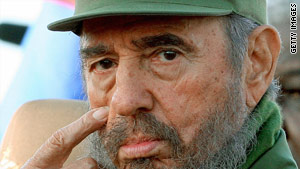
    Fidel Castro's sister Juanita worked for the CIA for 8 years.

    Fidel Castro's sister Juanita worked for the CIA for 8 years.

    STORY HIGHLIGHTS

    • Memoir by Fidel Castro's sister, Juanita, says she worked for CIA
    • Communicated via coded messages on short-wave radio
    • Cooperated with CIA between 1961 and 1969; left Cuba in 1964 for Miami
    • Agreed to help on condition she did not do anything violent against her brothers

    RELATED TOPICS

    (CNN) -- Juanita Castro, the younger sister of Cuban leaders Fidel and Raul Castro, worked for the CIA during some crucial years of the Cold War, she says in her new memoir.

    Juanita Castro, originally a supporter of the Cuban revolution that brought Fidel Castro to power in 1959, said she became disillusioned by growing injustice.

    "They wanted to talk to me because they had interesting things to tell me, and interesting things to ask of me, such as if I was willing to take that risk, if I was ready to listen to them. I was semi-shocked, but I said yes anyway," she told CNN affiliate Univision-Noticias 23 in Miami, Florida.

    Univision's interviewer, journalist Maria Antonieta Collins, co-wrote the book. "My Brothers Fidel and Raul, the Secret History" was released Monday.

    In the book, Juanita Castro said she was introduced to the world of the CIA through a close friend on the island nation, Virginia Leitao da Cunha, wife of the Brazilian ambassador to Cuba in the early 1960s.

    In June 1961, under the guise of visiting her sister Enma in Mexico City, Castro met a CIA agent who called himself "Enrique," the memoir says.

    In those first meetings in Mexico, which took place shortly after the failed Bay of Pigs invasion, Enrique asked the young woman about general information regarding Cuba since the revolution, and then asked whether she would work for the agency, according to the book.

    The job that Enrique described was to help protect CIA agents working in Cuba, Castro said.

    "The CIA has people in Cuba. Some could be discovered or already have. The mission is to protect them and move them from one place to another, providing the most security possible," the agent told her, according to the book.

    The CIA declined to comment on the book's claims. Her first mission was to deliver documents, money and messages hidden in canned goods from Mexico to Cuba, according to the book.

    Castro wrote that she agreed to help on the condition that she would not do anything violent against her brothers. She also refused payment when it was offered, she said.

    The CIA communicated through a short-wave radio. At an appointed hour daily, if the waltz "Fascination" aired on the radio, Castro would know that a message would follow. An overture from "Madame Butterfly" meant that no message was coming, according to the book. A special code was made up of numbers, which Castro would decode with a manual, she wrote.

    The period of her cooperation, from 1961 to 1969, included the Cuban Missile Crisis, which changed the way the Cold War was being waged. To resolve the crisis, the Soviet Union agreed to dismantle the missiles it had placed in Cuba in exchange for assurances that the United States would not invade Cuba.

    In 1964, Castro decided to leave Cuba for good, becoming an exile in Miami. She worked with anti-Castro exile groups there, and continued to cooperate with the CIA, according to the book.

    The relationship ended when U.S. policy toward the Soviet Union changed during Richard Nixon's presidency. As tensions eased with the Soviet Union, the United States would no longer back anti-Castro exiles, two CIA agents told her.

    When they asked her to use her influence to downplay rhetoric of a communist threat, she quit.

    The Cuban government had no immediate response to the publication of the book, Jorge Bolanos, chief of the Cuban Interest Section in Washington, told CNN en EspaƱol on Monday.

    "I haven't received any reaction from the Cuban government," he said. "I am not in the position to comment about a book which I have not read yet."

    CNN's Mariano Castillo and Carol Cratty contributed to this report.

    Police: As many as 20 present at gang rape outside school dance

    October 28, 2009 9:03 a.m. EDT

    Police say a student at Richmond High School was gang raped outside during a homecoming dance.

    Police say a student at Richmond High School was gang raped outside during a homecoming dance.

    STORY HIGHLIGHTS

    • 10 people involved in assault, 10 others watched and offered no help, police say
    • Richmond, California, police say student was gang raped for over two hours
    • Former student, 19, and 15-year-old arrested
    • Victim, 15, remains in the hospital in stable condition

    Richmond, California (CNN) -- Investigators say as many as 20 people were involved in or stood and watched the gang rape of a 15-year-old girl outside a California high school homecoming dance Saturday night.

    Police posted a $20,000 reward Tuesday for anyone who comes to them with information that helps arrest and convict those involved in what authorities describe as a 2½-hour assault on the Richmond High School campus in suburban San Francisco.

    Two teenage suspects have been jailed, but more arrests, as many as 20 total, are expected, according to a police detective.

    "We will be making arrests continually as we develop probable cause," said Richmond Police Lt. Mark Gagan. "With this number of people implicated in the incident we're going to be making arrests on an ongoing basis."

    As many as 10 people were involved in the assault in a dimly lighted back alley at the school, while another 10 people watched without calling 911 to report it, police said.

    A 1999 California law makes it illegal not to report a witnessed crime against a child, but the law applies only to children 14 and under.

    "We do not have the ability to arrest people who witnessed the crime and did nothing," Gagan said. "The law can be very rigid. We don't have the authority to make an arrest."

    Charles Ramsey, a member of the Richmond school board, said the school district bears some responsibility for the attack. School administrators and police apparently weren't watching the area as they should have, Ramsey said.

    The school said it would hold a safety meeting for parents and students Wednesday evening to address the assault.

    The victim was found unconscious under a bench shortly before midnight Saturday, after police received a call from someone in the area who had overheard people at the assault scene "reminiscing about the incident," Richmond Police Lt. Mark Gagan said.

    The girl was flown by helicopter to a hospital where she was admitted in critical condition. She was in stable condition Tuesday, police said.

    Investigators canvassed the community with fliers, which included the reward offer, hoping to identify more suspects Tuesday.

    "There is one individual in custody who has made some spontaneous statements that have led me to believe that he is culpable for what happened," Richmond police Lt. Johan Simon said.

    Nineteen-year-old Manuel Ortega, described as a former student at the school, was arrested soon after he fled the scene and will face charges of rape, robbery and kidnapping, police said.

    A 15-year-old was later arrested and charged with one count of felony sexual assault. A third teenager was being interviewed, Gagan said.

    "Based on witness statements and suspect statements, and also physical evidence, we know that she was raped by at least four suspects committing multiple sex acts," Gagan said.

    "As people announced over time that this was going on, more people came to see, and some actually participated," Gagan said.

    The attack occurred on school grounds as the annual homecoming dance was under way inside the school Saturday night, authorities said.

     
    Design by Free WordPress Themes | Bloggerized by Lasantha - Premium Blogger Themes | Macys Printable Coupons